
Introduction to Progressive Bodyweight Training
What is Progressive Overload in Bodyweight Workouts?
Progressive overload is a fundamental principle in fitness that involves gradually increasing the demand placed on your muscles to stimulate growth and strength. In bodyweight training, this means making your exercises more challenging over time without relying on weights or machines. You might increase reps, slow down the movement, reduce rest time, or try more advanced variations. The goal is to keep pushing your body just enough to adapt and improve.
Benefits of No-Equipment Workouts
Working out without equipment offers unmatched convenience. You can train anywhere — at home, in a park, or while traveling. It also reduces the risk of injury related to improper use of weights and lowers barriers for beginners. Beyond accessibility, bodyweight exercises often engage multiple muscle groups simultaneously, improving balance and coordination alongside strength. Plus, they’re easy to modify as you progress, making them perfect for people at any fitness level.
Assessing Your Starting Fitness Level
Simple Tests You Can Perform at Home
Before diving into a new workout plan, it’s important to understand where you currently stand. Simple tests like timing how many push-ups you can do in one set, holding a plank, or performing bodyweight squats can give you a baseline. These require no special equipment and reveal valuable information about your endurance, strength, and mobility. Tracking these results will help you measure progress as you follow your training program.
Setting Realistic Initial Goals
Setting achievable goals sets the stage for sustained motivation. Being honest about your current capabilities helps you avoid frustration and injuries. For example, if you can only do a few push-ups, aiming for 20 in a row in a month is ambitious but attainable with consistent effort. These realistic targets keep your focus sharp and celebrate milestones, encouraging you to stay committed to your fitness journey.
Designing Your Progressive Bodyweight Workout Plan
Choosing Effective Exercises for Each Muscle Group
A well-rounded bodyweight routine targets all major muscle groups to prevent imbalances and maximize functional strength. Push-ups and incline push-ups work the chest, shoulders, and triceps. Pulling movements might be a challenge without equipment, but exercises like inverted rows under a sturdy table or doorframe can help. Squats and lunges develop lower body strength, while planks and leg raises engage the core. Selecting exercises that address every muscle group ensures balanced progress.
Structuring Workout Sessions: Frequency and Duration
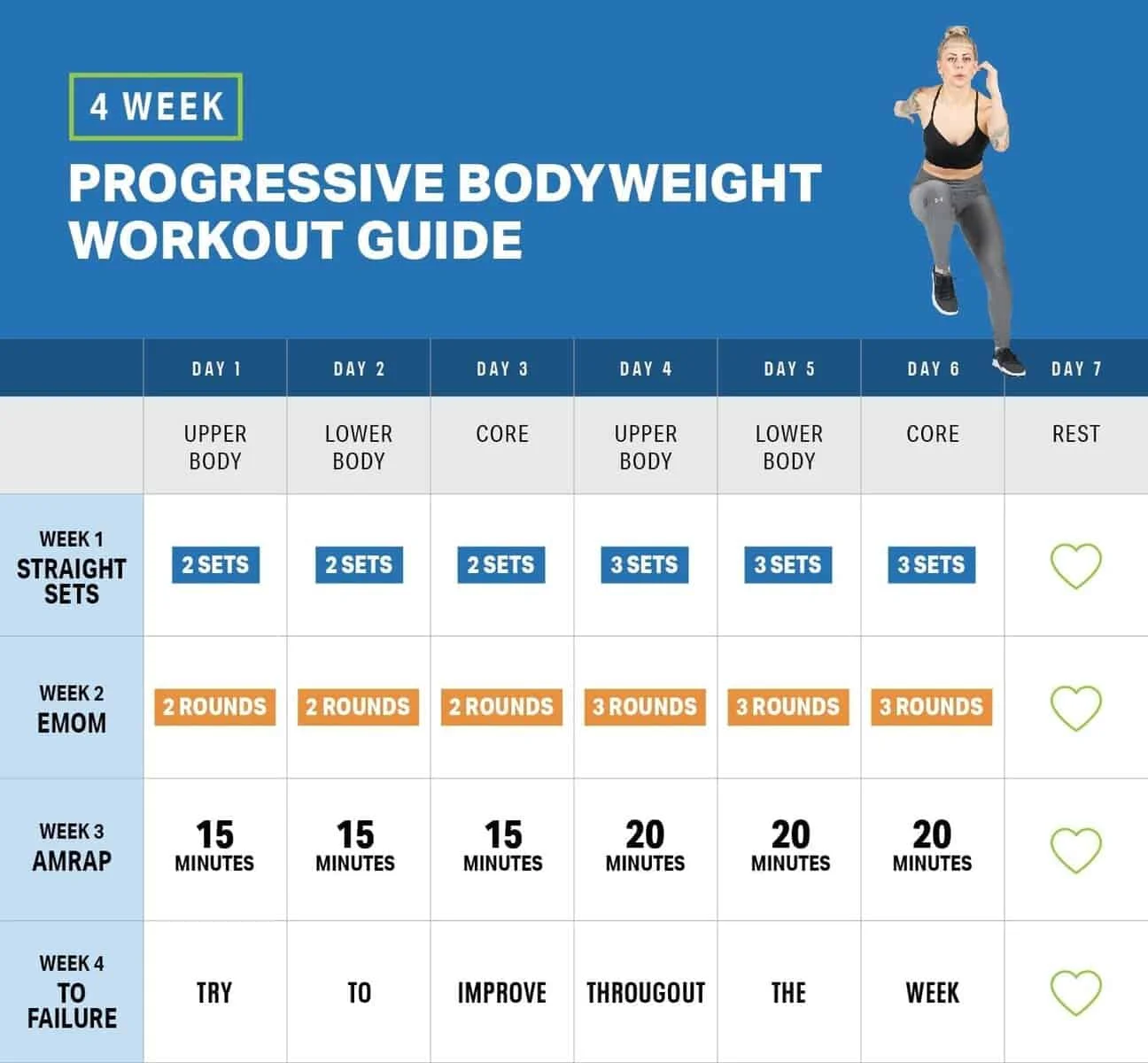
How often and how long you train depends on your lifestyle and goals. For most beginners, starting with three full-body sessions per week lasting 30 to 45 minutes strikes a good balance — enough for progress but with proper recovery time. As you advance, you can adjust frequency to 4-5 sessions per week or segment workouts into upper and lower body days. Remember, consistency beats intensity when building a habit.
How to Increase Intensity Without Equipment
Without weights, intensity is raised by modifying exercise variables. You can add reps or sets, shorten rest periods, or slow down reps to increase time under tension. Advanced variations also challenge your muscles, like progressing from knee push-ups to full push-ups, then to decline push-ups. Plyometric moves such as jump squats or explosive push-ups bring a new dimension of intensity. Small tweaks like these keep your body adapting and growing stronger.
Sample Weekly Workout Plan
Beginner Routine
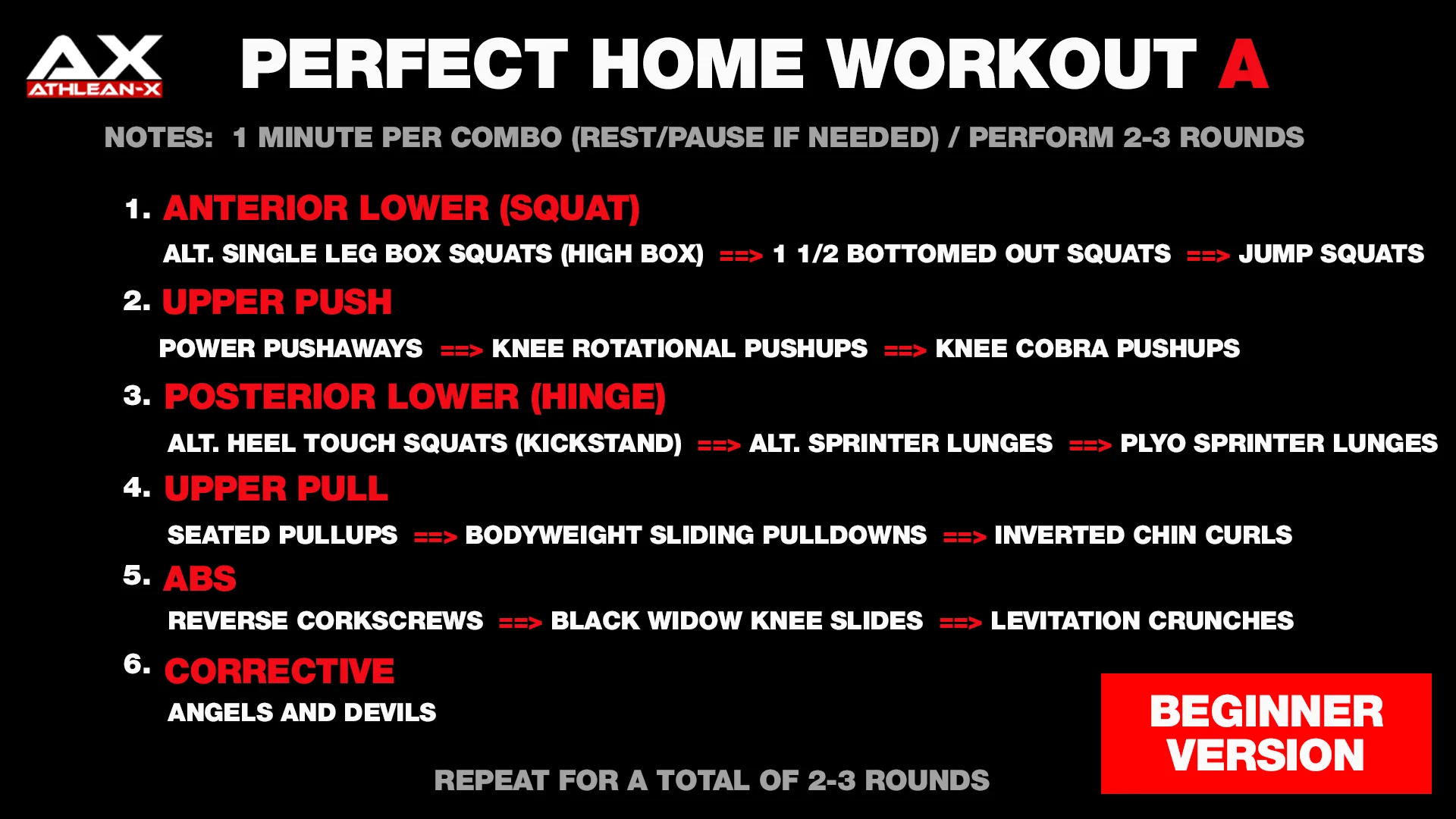
For those just starting out, simplicity is key. A sample routine might include three days of full-body workouts with a mix of push-ups, bodyweight squats, plank holds, and glute bridges. Focus on mastering form with manageable rep counts, around 8-12 reps per exercise, resting adequately between sets. Consistency and patience are your best allies here.
Intermediate Routine
At the intermediate level, it’s time to increase volume and introduce variations. You might perform four sessions weekly, splitting days between upper body, lower body, and core focus. Incorporate incline push-ups, Bulgarian split squats, and side planks to engage muscles differently. Adding short bursts of cardio or plyometric exercises can also enhance endurance and overall fitness.
Advanced Routine
Advanced trainees push boundaries with increased intensity and complexity. Workouts might involve five to six sessions per week with higher reps or shorter rest. Introduce challenging moves like one-arm push-ups, pistol squats, and L-sits. Combining strength work with dynamic cardio intervals can maximize calorie burn and muscle endurance. Variety and progression remain central.
Tracking Your Progress and Adjusting Your Plan
Monitoring Strength and Endurance Gains
Keeping a training journal or using fitness apps can help you log reps, sets, and exercise variations. Charting how many push-ups or how long you hold a plank over time provides tangible proof of improvement. Regular check-ins every few weeks provide motivation and highlight where adjustments are needed.
Modifying Exercises for Continued Progression
Your body adapts quickly, so stagnation can happen. When exercises feel easier, it’s time to advance. This might mean increasing reps, going slower to increase muscle engagement, or shifting to more demanding variations. Listening to your body is crucial — avoid rushing to advanced moves too soon to prevent injury. Progression should feel challenging but achievable.
Common Mistakes and How to Avoid Them
One of the most frequent errors is skipping warm-ups or cool-downs, which can lead to injury or fatigue. Another is neglecting form in pursuit of more reps — quality trumps quantity every time. Overtraining without sufficient rest may cause burnout and setbacks. Stay patient, progress gradually, and don’t hesitate to scale back when needed.
Conclusion: Staying Consistent and Motivated
Creating and following a progressive bodyweight workout plan without equipment is entirely feasible with the right approach. It lets you build strength, endurance, and confidence on your own terms. The key is consistency — showing up regularly and challenging yourself just enough to grow. Celebrate small victories and keep your goals in sight. With time, you’ll find your body transforming, proving that no equipment is needed to get stronger.


