
Why Stretching is Essential for Office Workers
Common Posture Issues in Desk Jobs
Spending hours at a desk often leads to common posture problems that many office workers silently endure. It’s typical to notice a forward head position, rounded shoulders, or a slouched back by midday. These habits develop gradually as the body responds to the static nature of sitting for extended periods. Unfortunately, poor posture not only causes discomfort but can also affect productivity and overall well-being throughout the workday.
Health Risks of Prolonged Sitting
Staying seated for long stretches diminishes blood flow, tightens muscles, and weakens others. Beyond the visible postural concerns, this sedentary behavior is linked to an increase in muscle stiffness, joint pain, and even chronic health issues over time. The body thrives on movement, and without it, the risk of developing repetitive strain injuries and reduced mobility grows significantly.
How Stretching Enhances Posture and Well-being
Integrating stretching into your daily routine offers much-needed relief from the constraints of sitting. By gently lengthening tight muscles and encouraging better alignment, stretching can improve posture and reduce tension. Moreover, it stimulates circulation, which helps to keep the mind alert and comforts the body. Stretching isn’t just a physical act; it also supports mental clarity, making the work hours feel less draining.
Top Stretching Exercises to Combat Office-Related Posture Problems
Neck and Shoulder Stretches
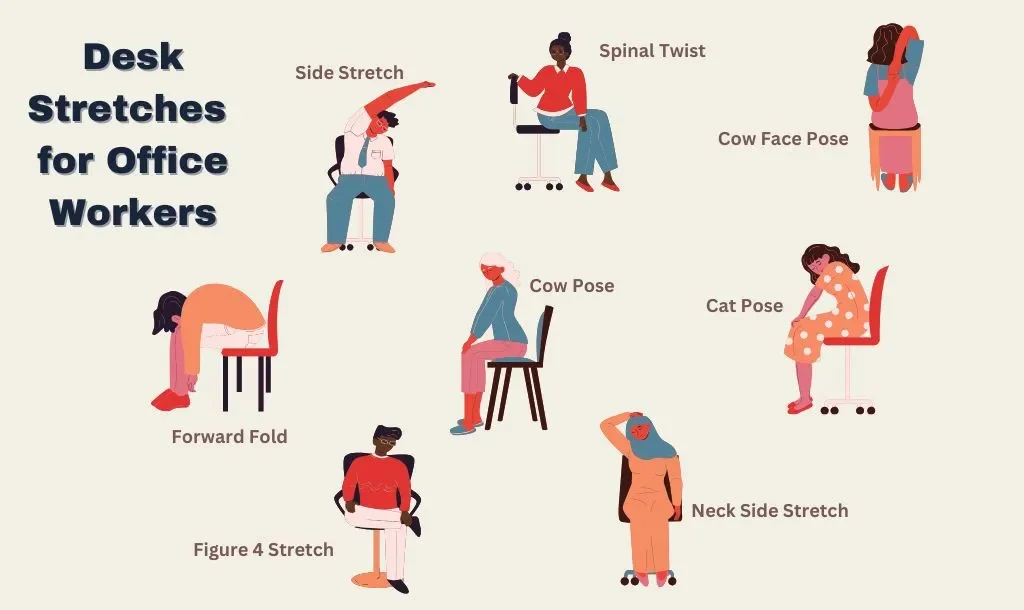
Neck and shoulder tension is often one of the first signs of poor posture at work. Simple movements like gentle neck tilts, where you slowly bring your ear toward your shoulder, can release stiffness. Shoulder rolls, performed by lifting the shoulders towards the ears and then rolling them back and down, help ease tightness. These stretches counteract the forward head posture commonly associated with screen time.
Back and Spine Mobilization Techniques
The spine bears the brunt of prolonged sitting, so mobilizing it is critical. Seated spinal twists provide an opportunity to gently rotate the torso, encouraging flexibility and reducing lower back stiffness. Another valuable stretch involves arching the back slightly while sitting, opening up the chest and lengthening the spine to combat the hunched position that develops throughout the day.
Hip and Leg Stretching to Improve Circulation
Often overlooked, the hips and legs can become tight and contribute indirectly to poor posture and discomfort. Hip flexor stretches, usually performed by stepping one foot forward and lowering the hips, can alleviate this tension. Additionally, hamstring stretches and calf raises improve circulation and reduce the risk of muscle cramps and fatigue, keeping you feeling more energized.
Integrating Stretching into Your Workday
Simple Routines to Do at Your Desk
Stretching doesn’t have to disrupt your workflow or require extra space. Desk stretches like seated cat-cow movements or neck rotations can be discreet and quick. Standing up and reaching the arms overhead or performing gentle side bends can refresh your body without stepping away from your workspace. Keeping these exercises brief but consistent makes it easy to incorporate them at regular breaks.
Recommended Frequency and Duration
Short stretching sessions every 30 to 60 minutes can be particularly effective. They prevent muscles from becoming too tight and re-energize your body for the tasks ahead. Even stretches lasting just one to two minutes can build up to significant benefits when practiced consistently throughout the day.
Tips for Staying Consistent and Motivated
Maintaining a stretching habit requires intention. Setting reminders on your phone or computer can prompt you to move. Some find it helpful to pair stretching with other activities, like standing to refocus or drinking water. Remembering how good you feel afterward – less tension, heightened focus – often serves as motivation to keep going.
Advanced Posture Improvement Strategies
Using Ergonomic Tools Alongside Stretching
While stretching is a powerful tool, combining it with ergonomic adjustments amplifies the benefits. Chairs that support the natural curve of your spine, keyboards placed at comfortable heights, and monitors at eye level help reduce strain. These tools provide a solid foundation, making it easier for stretching to correct posture without constantly fighting poor ergonomics.
Combining Stretching with Strengthening Exercises
Strengthening and stretching work hand in hand to support posture. While stretching loosens tight muscles, strengthening exercises build the endurance necessary to hold good posture throughout the day. Simple routines that target the core, upper back, and hips complement stretching and contribute to long-lasting improvements, helping you stand and sit with confidence.
Conclusion: Long-Term Benefits of Stretching for Office Workers
Incorporating stretching into your workday is more than a quick fix—it’s a sustainable way to nurture your body and improve posture. Over time, these small movements can reduce discomfort, enhance circulation, and counteract the effects of prolonged sitting. By making stretching a natural part of your routine, you invest in your well-being, productivity, and comfort for years to come.


