
Understanding the Night Owl Lifestyle
What Defines a Night Owl?
Night owls are individuals who naturally feel more alert and active during the late evening hours. Their internal clocks, known as circadian rhythms, incline them to stay up late and wake up later in the day. This pattern contrasts with early risers who peak in the morning. Being a night owl is more than just a habit—it reflects a biological preference for certain hours.
Challenges Night Owls Face with Morning Routines
Starting a consistent morning routine can be difficult for night owls. Early wake times often clash with their natural sleep cycles, leading to feelings of grogginess and decreased focus. Social and work commitments may require early starts that are out of sync with their body clocks. As a result, maintaining energy and motivation in the morning can become a persistent struggle.
Benefits of Creating a Morning Routine for Night Owls
Improving Productivity and Mental Health
Developing a morning routine tailored to night owls can enhance productivity by providing structure to the start of the day. Engaging in mindful activities early on helps improve concentration and mood. Establishing consistency supports mental well-being by reducing stress that comes with rushed or unpredictable mornings.
Balancing Natural Rhythms with Daily Responsibilities
A realistic morning routine respects night owls’ natural rhythms while accommodating necessary obligations. It allows flexibility in wake-up times and activity choices, which helps maintain energy throughout the day. Finding this balance can lead to better overall lifestyle satisfaction.
Assessing Your Current Sleep and Wake Patterns
Tracking Your Sleep Cycle
Before making changes, it’s important to observe your existing sleep habits. Keeping a simple sleep diary or using apps designed to monitor sleep duration and quality can provide insight. Noting times you fall asleep and wake up uncovers patterns that inform gradual adjustments.
Identifying Energy Peaks and Lows
Alongside sleep tracking, paying attention to when you feel most and least energetic during the day helps tailor your routine. Night owls often experience low energy in the early morning with a peak later. Recognizing these periods enables smarter scheduling of tasks to align with natural alertness.
Building a Gentle Wake-Up Strategy
Using Light and Sound to Wake Up Naturally
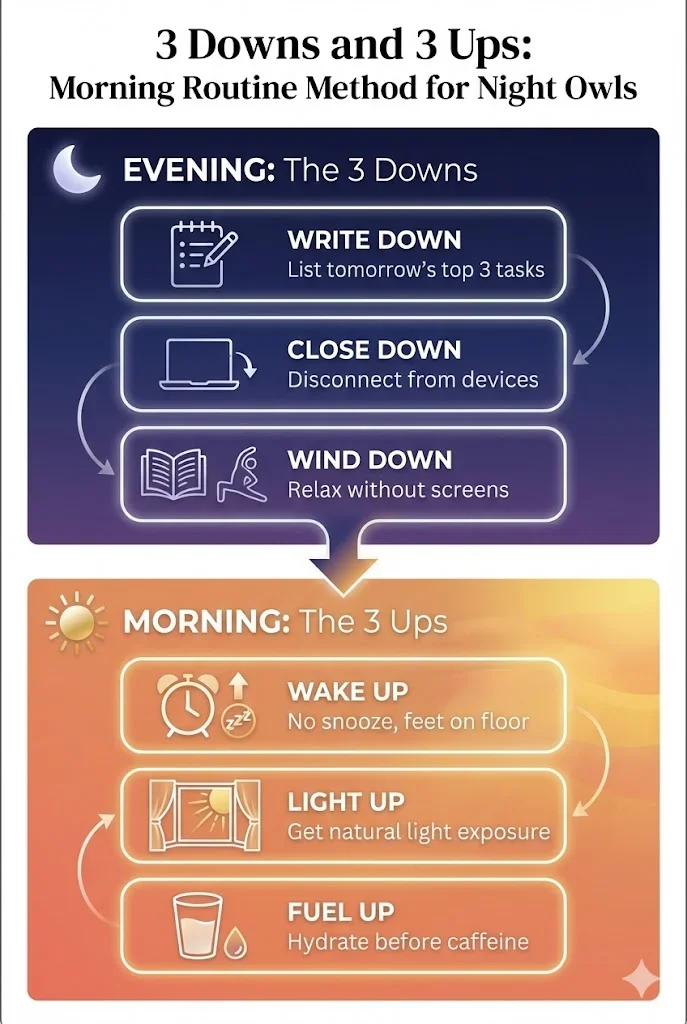
Exposure to natural light upon waking can ease the transition from sleep. Gradual light alarms simulate sunrise, gently nudging the body awake rather than abrupt noise. Calming sounds or favorite tunes can complement this approach, reducing morning stress.
Gradual Adjustments Instead of Sudden Changes
Attempting a drastic shift in wake time usually backfires. Instead, aim to move your alarm earlier by 10 to 15 minutes every few days. This incremental method gives your body time to adapt without overwhelming it, resulting in more sustainable change.
Designing a Realistic Morning Routine Step-by-Step
Step 1: Set Achievable Wake-Up Times
Start with wake-up times that are slightly earlier than your usual. Avoid setting unreasonably early alarms that contradict your natural rhythm. Consistency is key, so stick to the chosen time even on weekends to reinforce your body clock.
Step 2: Incorporate Relaxing and Energizing Activities
Balance calmness and stimulation by including low-pressure tasks like stretching or journaling, alongside energizing actions such as light exercise. These activities help ease into wakefulness while preparing your mind and body for the day.
Step 3: Prioritize Nutrition and Hydration
A simple breakfast and water intake in the morning can rehydrate the body and boost alertness. Opt for light, nourishing options that feel manageable, avoiding heavy meals that may induce sluggishness.
Step 4: Plan Short Morning Tasks to Boost Momentum
Completing small, achievable tasks builds a sense of accomplishment early on. This momentum encourages productivity and makes the routine feel rewarding rather than burdensome.
Adapting Your Evening Routine to Support Mornings
Limiting Blue Light Exposure
Reducing screen time before bed helps prepare your body for rest. Blue light from devices can interfere with melatonin production, delaying sleep. Using screen filters or switching off electronics an hour before bedtime encourages better sleep quality.
Creating a Consistent Wind-Down Ritual
Engaging in relaxing activities like reading or gentle stretching signals the body to unwind. A predictable evening ritual calms the mind and fosters readiness for sleep, which supports easier mornings for night owls.
Tools and Apps to Support Night Owls in Transitioning
Sleep Tracking and Alarm Apps
Various apps can help monitor sleep stages and optimize wake times. Smart alarms that wake during light sleep phases make morning rises gentler and less disorienting.
Meditation and Light Therapy Aids
Guided meditation apps assist in reducing pre-sleep anxiety and improving relaxation. Light therapy lamps provide controlled exposure to bright light in the morning, helping reset circadian rhythms.
Overcoming Common Obstacles
Dealing with Social and Work Expectations
Adapting a morning routine sometimes means negotiating with others about schedules. Communicating your needs and gradually adjusting commitments can ease pressure. Finding small pockets of time for your routine even on busy days is beneficial.
Handling Setbacks: When Old Habits Return
Setbacks are normal during adjustments. Instead of frustration, view them as part of the process. Flexibility and persistence in returning to your routine foster long-term success.


