
Understanding Mindfulness Journaling
What is Mindfulness Journaling?
Mindfulness journaling is a simple yet powerful practice that combines reflective writing with mindful awareness. It involves documenting your thoughts, feelings, and sensory experiences in the present moment without judgment. Unlike traditional journaling, the focus is on observing your inner state with acceptance, which encourages self-awareness and emotional clarity.
How Mindfulness Helps in Reducing Anxiety
Practicing mindfulness through journaling allows you to break free from overwhelming cycles of anxious thoughts. By writing down your feelings, you create distance from stressors and gain perspective. This habit fosters a calmer mind and helps regulate emotional responses. Over time, mindfulness journaling builds resilience against anxiety by promoting acceptance and reducing rumination.
Getting Started: Tools and Tips for Beginners
Choosing the Right Journal
Selecting a journal that feels inviting is crucial. Whether a simple notebook or a guided mindfulness journal, comfort and accessibility encourage consistent writing. Opt for a size and style that suits your daily routine and aligns with your personal taste. Remember, the best journal is one you will return to regularly.
Creating a Comfortable Journaling Space
Designating a peaceful spot for journaling enhances the experience. This could be a cozy corner, a quiet room, or an outdoor setting where distractions are minimal. Surround yourself with calming elements like soft lighting or gentle music to deepen your mindfulness practice. A comfortable environment helps you fully engage with your thoughts and feelings.
Mindfulness Journaling Prompts for Daily Practice
Morning Reflection to Set Intentions
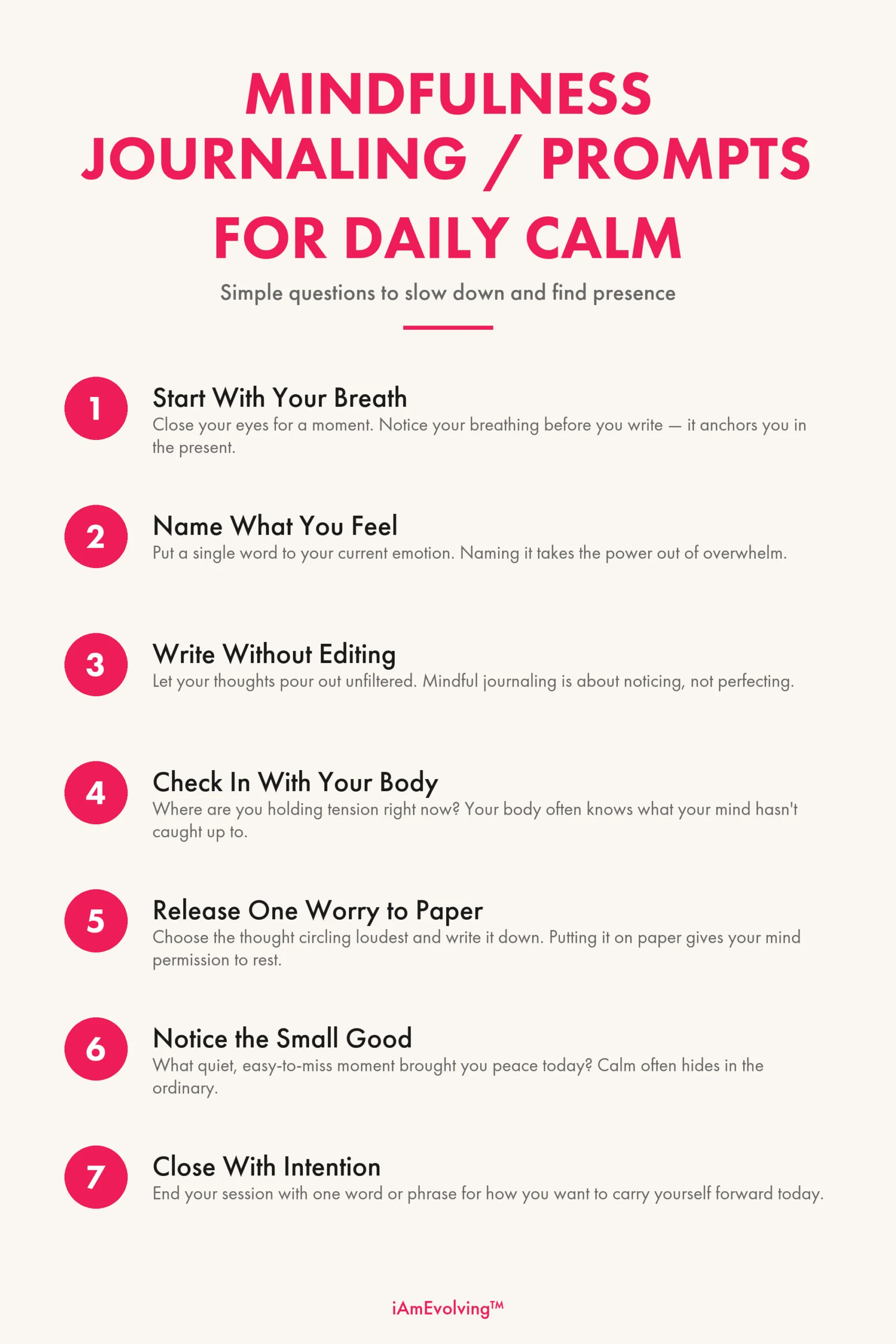
Starting your day with mindful journaling establishes a positive tone. Simple prompts such as “What do I feel right now?” or “What are my intentions for today?” encourage presence and focus. These reflections help ground your mind before daily challenges arise, making anxiety easier to manage throughout the day.
Evening Prompts to Release Anxiety
Ending the day with journaling provides a chance to process stress and release tension. Prompts like “What made me anxious today?” or “How did I respond to stress?” facilitate understanding and emotional release. Writing these thoughts down can prevent them from lingering overnight, promoting restful sleep and mental clarity.
Creative Techniques to Enhance Mindfulness Journaling
Incorporating Gratitude Lists
Adding gratitude lists to your journaling routine shifts focus to positive aspects of life. Even brief notes about things you’re thankful for can reduce anxiety and improve mood. This practice balances difficult emotions with moments of appreciation, reinforcing a hopeful outlook.
Using Senses-Based Prompts
Engaging your senses through prompts deepens mindfulness. Questions like “What sounds do I notice right now?” or “What textures can I feel?” anchor you in the present moment. This sensory awareness interrupts anxious thought patterns and fosters a calm, grounded mindset.
Tracking Your Progress and Emotional Growth
Identifying Patterns in Anxiety Symptoms
Regular journaling allows you to recognize triggers and recurring themes related to anxiety. Spotting these patterns helps you understand your emotional landscape better. Awareness of what sparks anxiety equips you to develop effective coping strategies tailored to your needs.
Adjusting Your Journaling Routine Over Time
As you grow more comfortable with mindfulness journaling, adapting prompts and frequency can keep the practice engaging. You might explore deeper reflections or integrate creative formats like poetry or drawing. Staying flexible ensures journaling remains a supportive tool for managing anxiety throughout your journey.


