
Understanding Guided Meditation and Its Benefits at Work
What is Guided Meditation?
Guided meditation is a mindfulness practice led by a narrator or teacher who directs your focus through visualization, breathing exercises, or mental imagery. Unlike silent meditation, it provides verbal cues and structure, making it easier for beginners to stay engaged. Imagine Sarah, a busy project manager, who uses a 10-minute guided meditation each morning to clear her head before diving into her tasks. This simple practice anchors her day and helps avoid the usual rush-induced stress.
How Guided Meditation Improves Focus and Productivity
When you meditate with guidance, it’s easier to quiet the mind’s chatter and train your attention. This heightened focus translates directly to work efficiency. Take John, a software developer, who found his afternoon productivity slump turned around once he started a quick meditation break. These moments help reset his cognitive function, allowing him to return to coding refreshed and more alert. The practice also reduces anxiety, which can otherwise hamper decision-making and creativity.
Scientific Evidence Supporting Workplace Meditation
Numerous studies support the benefits of guided meditation at work. Research from Harvard showed that mindfulness meditation can improve working memory and reduce stress hormone levels. Similarly, a study published in the Journal of Occupational Health Psychology found that employees who engaged in brief daily meditation sessions reported higher job satisfaction and decreased burnout. Such data underscore why integrating guided meditation into work routines is more than just a trend—it’s a proven strategy for better mental well-being and effectiveness.
Choosing the Right Guided Meditation Practices for Your Workflow
Types of Guided Meditation Suitable for Work
Not all guided meditations fit the work context equally. For focus enhancement, meditations emphasizing breath awareness or body scans help ground your attention quickly without requiring lengthy sessions. On busy days, practices centered on stress relief or short visualizations can gently ease tension. For example, Emma, a graphic designer, prefers meditations that involve imagining a peaceful scene, which helps her calm creative blocks and return to design tasks with fresh perspective.
Duration and Timing: When to Meditate During Your Workday
Finding the right time and length for meditation is crucial to integration. Morning sessions lasting 5 to 15 minutes set a calm tone for the entire day. Mid-morning or early afternoon breaks for 3 to 5 minutes can combat fatigue and promote sustained concentration. It’s less about long meditations and more about consistency. When Lucas, an accountant, started meditating during his lunch break, he noticed a significant dip in his afternoon distractions, allowing him to finish tasks more efficiently.
Tools and Apps to Facilitate Meditation Integration
Technology can be a helpful ally when adding guided meditation to your workflow. Apps like Headspace, Calm, and Insight Timer offer a range of workplace-friendly sessions with customizable lengths. These tools also provide reminders, helping you maintain a routine amid deadlines. For remote workers, combining meditation apps with noise-canceling headphones creates a focused environment that mimics a quiet retreat, boosting the overall impact of the practice.
Step-by-Step Guide to Incorporating Meditation into Daily Tasks
Morning Meditation Rituals to Start Your Day Focused
Begin by choosing a quiet spot where you won’t be disturbed for 10 minutes. Sit comfortably and select a guided meditation that centers on intention setting or breath focus. Visualize your priorities as you listen, aligning your mental energy with your daily goals. Rachel, a team leader, sets this ritual every day before checking emails, which helps her approach her inbox with calm instead of overwhelm.
Quick Meditation Breaks for Midday Rejuvenation
Midday meditation should be easy to fit in and refreshing. After a task or meeting, take a 3 to 5-minute guided session focusing on releasing tension and clearing your mind. Using a simple breathing exercise or body scan helps break the cycle of distraction. Tom, who works in sales, uses this short break to recenter before his afternoon calls, resulting in more engaging and attentive conversations with clients.
Evening Reflection Meditations to Unwind and Reset
Ending the workday with a guided meditation can improve sleep and mental reset. Choose meditations that promote relaxation and gratitude, allowing you to reflect on accomplishments and release lingering stress. Maria, a healthcare administrator, finds these sessions help her transition smoothly from work mode to personal time, avoiding burnout and improving her overall balance.
Creating a Workspace Conducive to Meditation
Designing a Quiet Meditation Corner
Designate a small space in your workspace specifically for meditation. It doesn’t need to be elaborate—just a comfortable chair or cushion, calming décor, and minimal distractions. In shared offices, this corner serves as a mental refuge. When Alex, a marketing analyst, created a meditation nook with plants and soft lighting, he noticed it encouraged him to take mindful breaks more regularly.
Minimizing Distractions and Managing Noise
Noise interruptions are one of the biggest obstacles to workplace meditation. Investing in noise-canceling headphones or using white noise machines can help drown out chatter and ambient sounds. Additionally, setting clear signals to colleagues, such as a “do not disturb” sign during meditation, fosters respect for your mindfulness time. These small adjustments have kept Sara, a customer service rep, consistent in her practice despite a bustling open office.
Ergonomic Tips for Comfortable Meditation at Your Desk
Meditating at your desk requires attention to posture to avoid discomfort. Sit with your feet flat on the floor, back straight but relaxed. Use a cushion or lumbar support if necessary. Keeping your hands comfortably on your lap or desk helps maintain a grounded feeling. Incorporating stretches before meditation can also relieve tension. This approach allowed James, a financial advisor, to seamlessly include meditation without needing to leave his workspace.
Overcoming Common Challenges in Meditation Practice at Work
Dealing with Interruptions and Distractions
Interruptions are inevitable in work environments, but setting boundaries can protect your meditation time. Communicate your schedule with teammates and choose less busy times if possible. If an interruption occurs mid-meditation, gently acknowledge it without frustration and return your focus to the practice. Like Nina, a consultant, learned, patience with distractions is part of building a sustainable meditation habit.
Staying Consistent Amidst a Busy Schedule
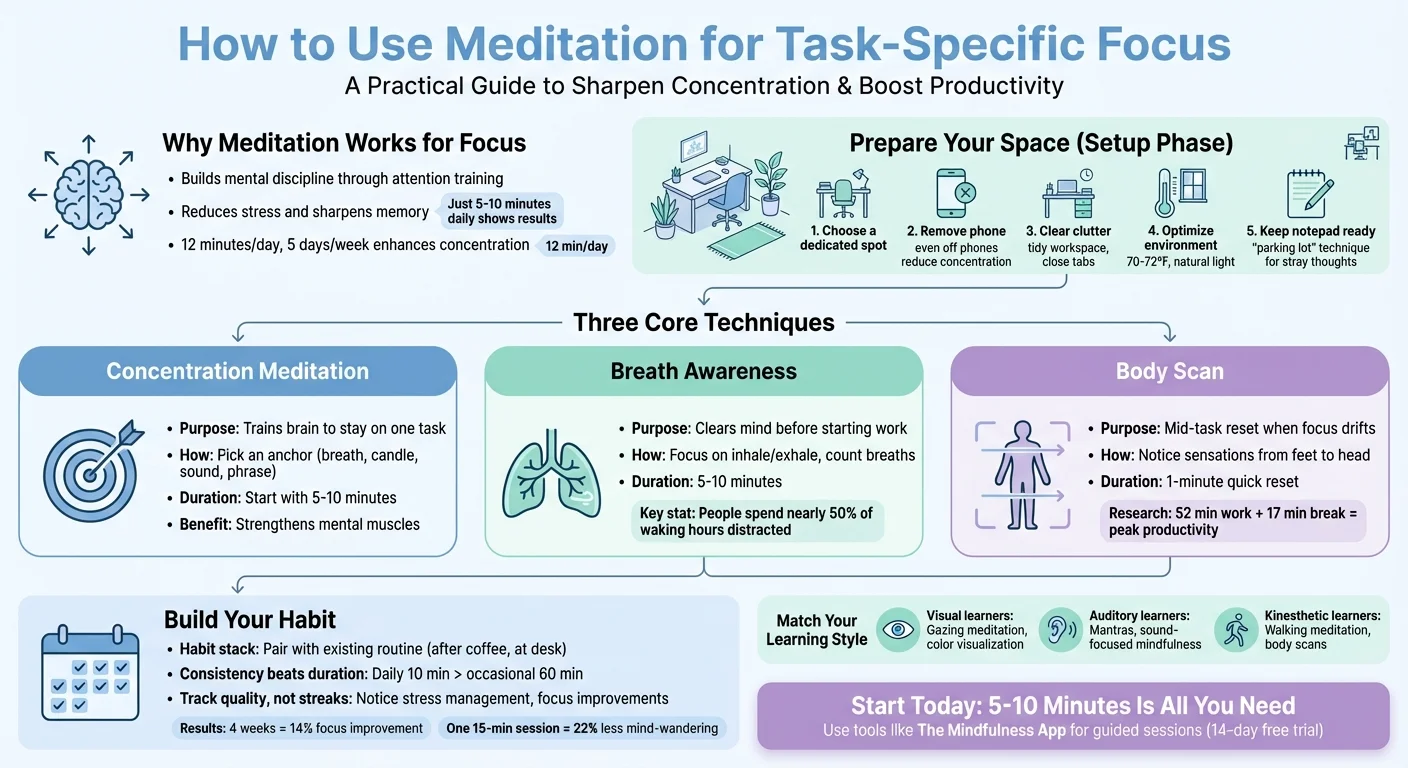
Consistency is often the biggest hurdle. Starting small and gradually increasing meditation duration reduces pressure and builds routine. Linking meditation with existing habits—such as immediately after morning coffee or before a team meeting—helps embed it into your day naturally. Michael, a product manager, credits his daily guided meditation to pairing it with his smartphone alarm, ensuring he never skips his session.
Tracking Progress and Maintaining Motivation
Keeping a simple journal or using app trackers to note how you feel before and after sessions can highlight meditation’s benefits over time. Celebrating small wins, like improved focus or reduced stress episodes, boosts motivation. Sharing experiences with colleagues or joining mindfulness groups creates accountability and community support, helping avoid stagnation. This strategy helped Priya, a designer, transform meditation from a sporadic activity into a lasting habit.


