
Introduction to Body Scan Meditation for Anxiety Relief
What is Body Scan Meditation?
Body scan meditation is a mindfulness technique where you mentally ‘scan’ your body, paying close attention to physical sensations in a slow, intentional way. It encourages you to observe areas of tension, discomfort, or ease without trying to change them. Imagine lying down after a long day, gradually noticing the points where your muscles hold tightness or where your breath feels shallow. This process cultivates a deep connection between your mind and body, fostering awareness and relaxation.
How Body Scan Helps Reduce Anxiety
For many beginners struggling with anxiety, body scan meditation offers a grounding practice that breaks the cycle of overwhelming worry and physical symptoms of stress. Anxiety often manifests as tight shoulders, a racing heart, or shallow breathing. By focusing on these sensations rather than reacting to them, you create space between anxious thoughts and your experience. A friend of mine shared how, during a panic episode, practicing body scan helped her recognize the tension in her chest and gradually ease it, shifting her focus away from fear and toward calm observation.
Preparing for Your Body Scan Meditation Practice
Choosing a Comfortable Environment
Before you begin, find a quiet spot with minimal distractions—a place where you feel safe and relaxed. This might be a corner of your living room with soft lighting or even a peaceful outdoor space in your backyard. One beginner found that turning off their phone and dimming the lights created a cocoon of calm, making it easier to stay focused during the scan.
Setting the Right Time and Duration
Starting small works best. Aim for five to ten minutes initially, then gradually increase as you become more comfortable. Many anxiety sufferers notice that practicing body scan before bedtime reduces racing thoughts, helping them fall asleep more easily. Choose a time when you’re less likely to be interrupted, such as early morning or late evening, to foster consistency. A colleague scheduled sessions during lunch breaks—turning anxiety into a midday reset.
Gathering Essential Tools and Props
While body scan meditation requires no special equipment, a few props can enhance comfort, especially for beginners. Consider a supportive cushion or yoga mat if you prefer lying down. Some find a light blanket helpful to keep warm, as relaxation may lower body temperature. Noise-canceling headphones can also aid focus, particularly in busy households. These small additions create a personal sanctuary conducive to deeper practice.
Step-by-Step Body Scan Meditation Process
Step 1: Settling Into a Relaxed Position
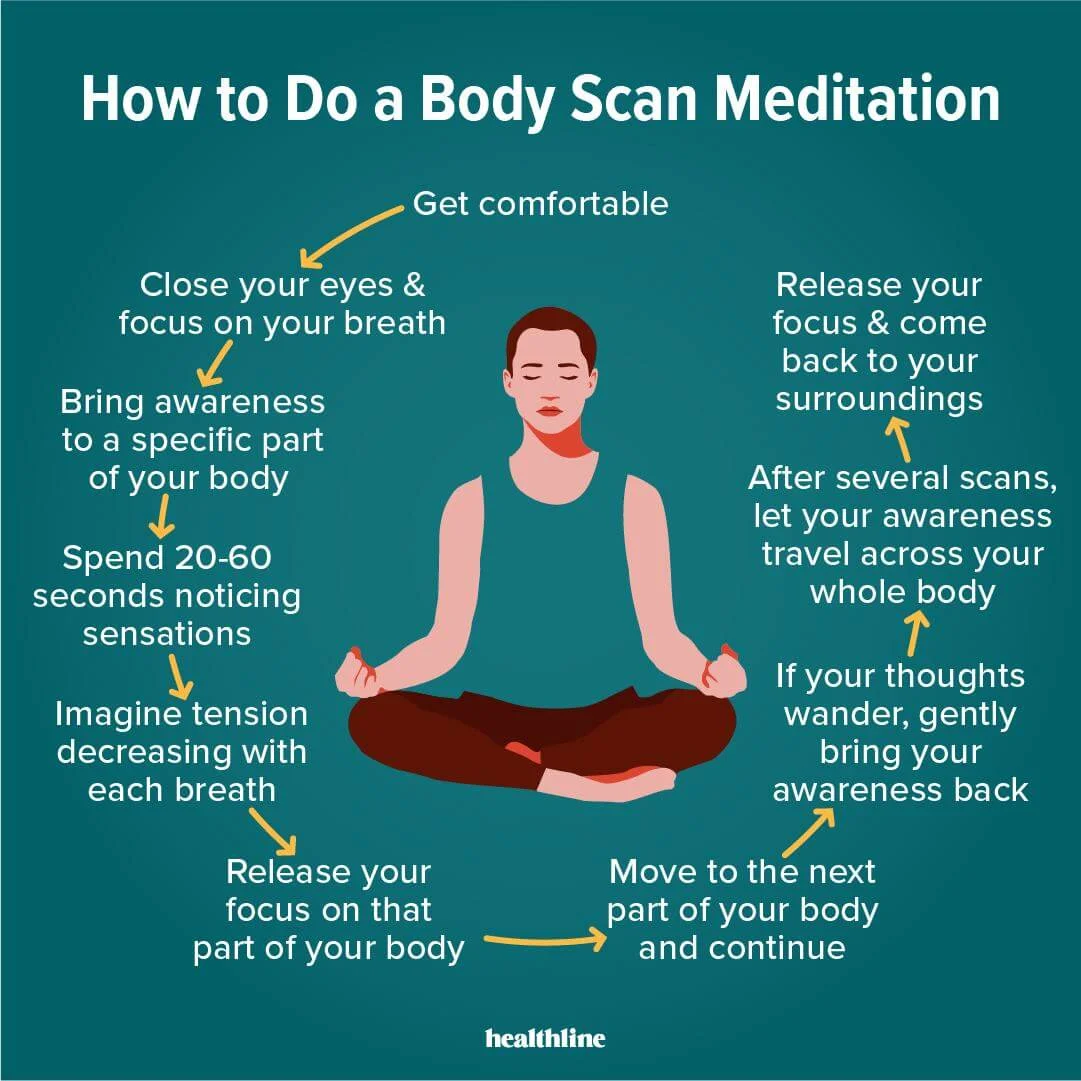
Begin by lying flat on your back or sitting comfortably with a straight spine. Ensure your limbs are uncrossed and relaxed. For example, I recently guided a stressed coworker who found lying down on a yoga mat in her living room simple and effective. A settled posture lays the foundation for mindful awareness.
Step 2: Focusing on Your Breath
Close your eyes gently and take slow, deep breaths. Notice the rising and falling of your abdomen or chest. Breathing anchors your attention and soothes the nervous system. Think of your breath as an internal metronome, steadying the flow of awareness throughout the meditation.
Step 3: Gradually Scanning the Body
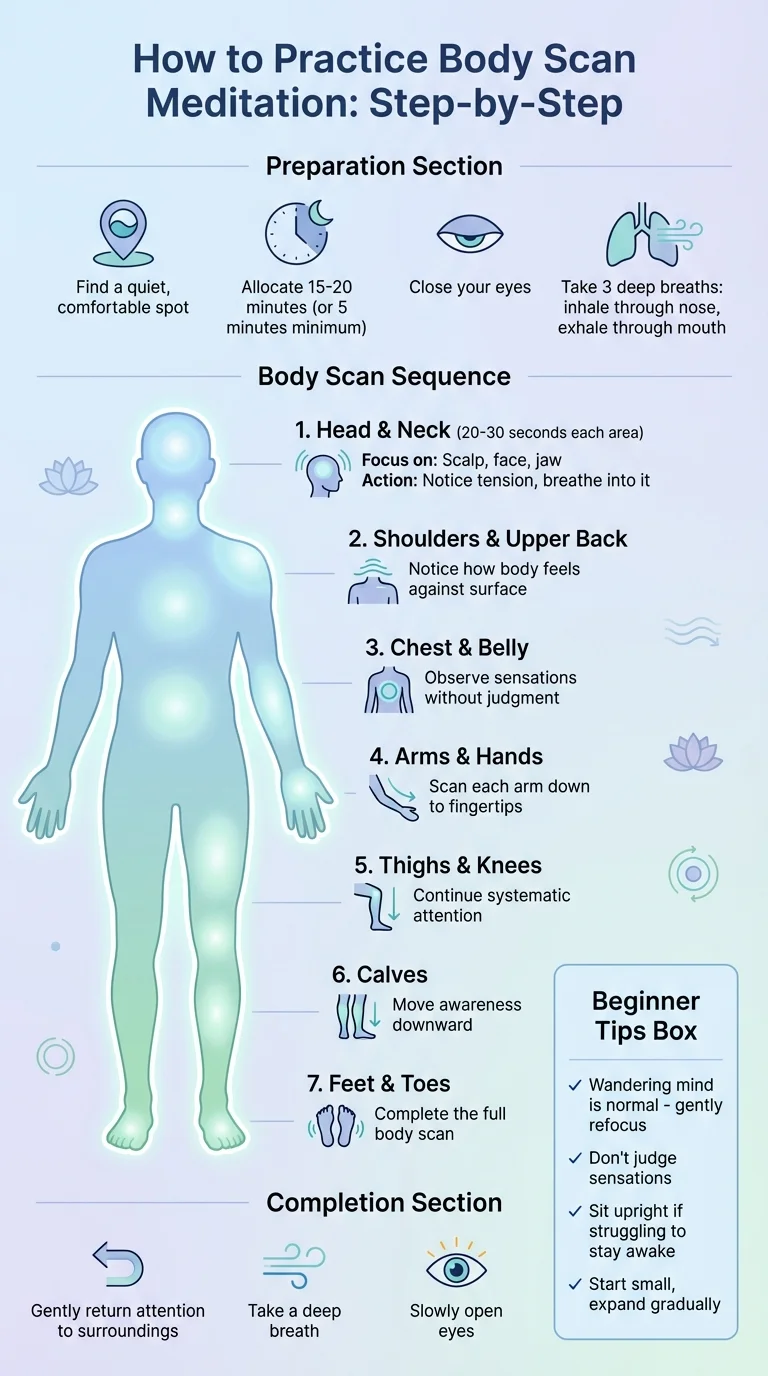
Start at your feet and slowly move your attention upward, part by part—feet, calves, knees, thighs, hips, abdomen, chest, arms, neck, and finally the head. Spend a few moments on each area, noticing any sensations like warmth, tingling, tightness, or even numbness. A friend shared that focusing on each segment helped him uncover areas of chronic tension he hadn’t realized before, such as clenched jaw muscles linked to his anxiety.
Step 4: Noticing Sensations Without Judgment
As you scan each area, resist the urge to label sensations as good or bad. Instead, adopt a curious and accepting attitude. For example, if you notice discomfort, simply acknowledge it: “There is tightness here,” without trying to fix it. This non-judgmental stance reduces anxiety by shifting your role from a critic to an observer.
Step 5: Completing the Scan and Reflection
After reaching your head, take a few more deep breaths and gradually bring your awareness back to the room. Open your eyes when you feel ready and spend a moment reflecting on how your body feels now compared to the start. Often, you’ll notice a subtle easing of stress and a heightened sense of calm. One beginner described this moment as a “quiet reset” in the middle of a chaotic day.
Tips for Beginners to Maximize Anxiety Relief
Dealing with Wandering Thoughts
It’s normal for the mind to wander during meditation, especially for those new to the practice or coping with anxiety. When distractions arise, gently guide your attention back to the area you were scanning or to your breath. Imagine your thoughts as clouds drifting away without engaging with them. Over time, this gentle redirection becomes easier and less frustrating.
Consistency and Practice Frequency
Daily practice reinforces the calming effects. Even spending five minutes each day can build resilience against anxiety. Consider setting a reminder or linking your meditation to an existing habit, like brushing your teeth or drinking your morning tea. A client who committed to morning body scans reported feeling more grounded throughout her workday, evidencing the power of routine.
Incorporating Body Scan into a Daily Routine
Body scan meditation can be paired with other self-care activities such as journaling, gentle stretching, or deep breathing exercises. For instance, some people find combining body scan with light yoga creates a holistic approach to reducing physical and mental tension. Scheduling a brief practice after work or before bed can mark a clear transition from activity to rest.
Additional Resources and Next Steps
Guided Meditation Apps and Videos
For beginners, guided body scan meditations provide helpful direction and structure. Popular apps like Headspace, Calm, or Insight Timer offer varied options tailored for anxiety relief. Watching videos or audio guides can ease the learning curve and keep you motivated. One user shared that following a soothing voice during practice helped her stay focused and made the meditation more accessible.
Exploring Other Mindfulness Techniques for Anxiety
Body scan meditation is just one effective tool in managing anxiety. As you progress, exploring complementary techniques such as mindful breathing, progressive muscle relaxation, or grounding exercises can deepen your practice. Combining these methods creates a personalized toolkit for navigating stress. For example, a friend who initially started with body scans expanded to mindful walking and found it beneficial during stressful commutes.


