
Introduction to Chair Stretching for Office Workers
Why Chair Stretches Are Essential for Desk Jobs
Spending long hours seated at a desk has become the reality for many office employees. While sitting is necessary for completing computer-based tasks, it often comes with physical challenges. Chair stretching exercises offer a simple and practical way to counteract the negative effects of prolonged sitting. These stretches help improve circulation, reduce muscle tension, and promote better posture without requiring you to leave your workspace.
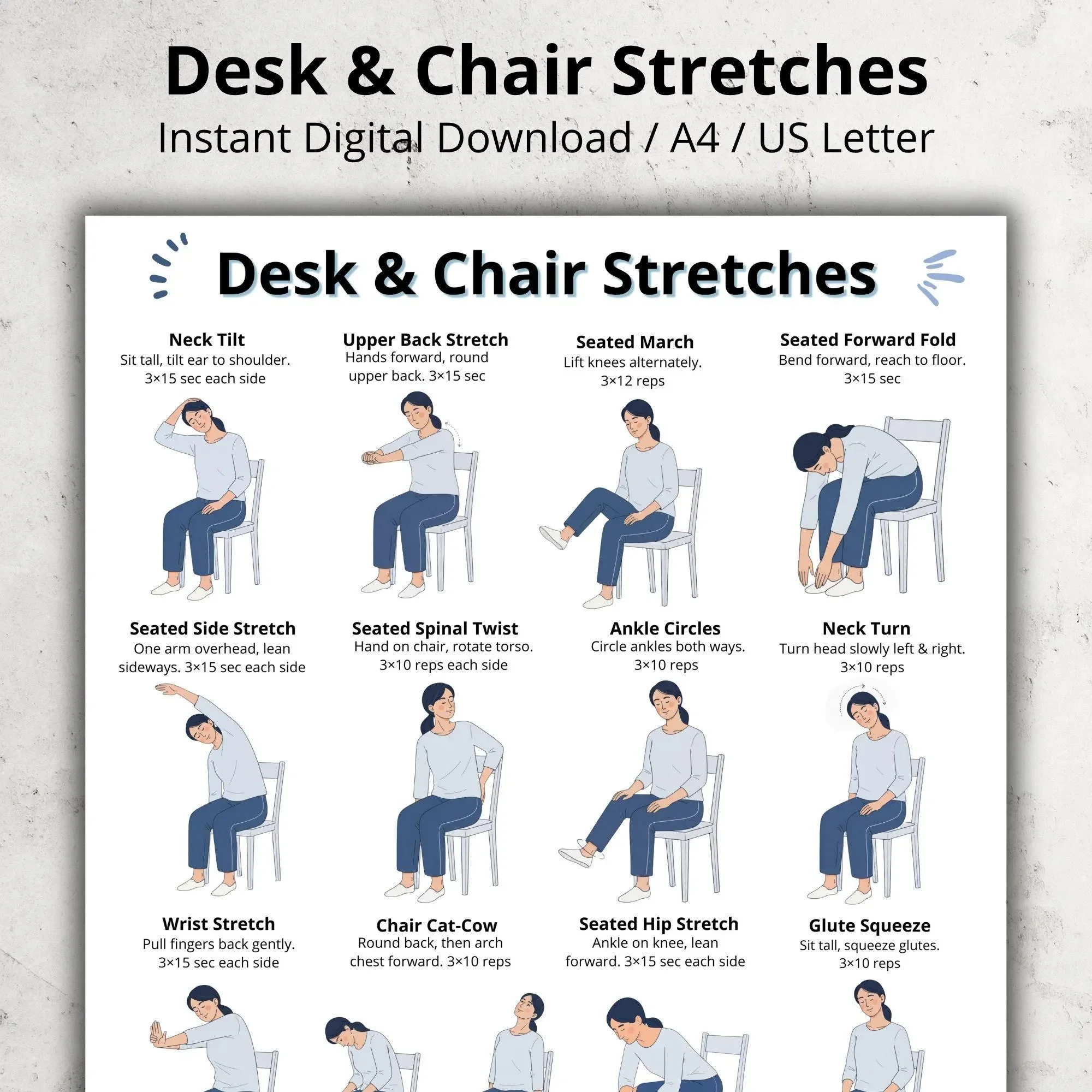
Incorporating chair stretches into your daily routine doesn’t demand special equipment or extensive time. Even brief moments of movement can make a significant difference, enhancing comfort and productivity throughout the workday.
Common Issues Caused by Prolonged Sitting
Sitting for extended periods can lead to a variety of discomforts and health concerns. Many office workers experience stiffness in the neck, shoulders, and back. Over time, poor posture may contribute to chronic pain or reduced mobility. Additionally, circulation tends to slow down, which can cause fatigue and even swelling in the lower limbs.
Understanding these issues highlights why it’s so important to introduce movement through chair stretching. These exercises target problem areas that often become tight and inflexible from being in a seated position, offering relief and promoting long-term wellness.
Preparing for Your Chair Stretching Routine
Choosing the Right Chair and Workspace Setup
Before you dive into chair stretching, it’s helpful to evaluate your chair and workspace. A chair that supports good posture makes stretching easier and more effective. Look for one with a sturdy seat, back support that encourages an upright position, and adjustable features if possible.
Your desk height and monitor placement matter too. When everything is set up ergonomically, you reduce strain during work and make stretches more comfortable. Clear some space around your chair to allow free movement without obstacles.
Safety Tips to Keep in Mind
Stretching is generally safe, but it’s wise to proceed gently, especially if you’re new to these exercises. Never force your body into positions that cause pain. Move slowly, breathe steadily, and listen to your muscles. If something feels too intense, ease off.
Take care to maintain control in every stretch. Avoid bouncing or quick jerks, which can lead to injury. Remember, the goal is to relieve tension, not to push your limits aggressively.
Step-by-Step Chair Stretching Exercises
Neck and Shoulder Loosening Techniques
Start with gentle neck rolls to release tension. Slowly tilt your head from side to side, then forward and backward, keeping movements smooth and deliberate. Following this, shrug your shoulders up towards your ears, hold briefly, then release them down to feel a loosening effect.
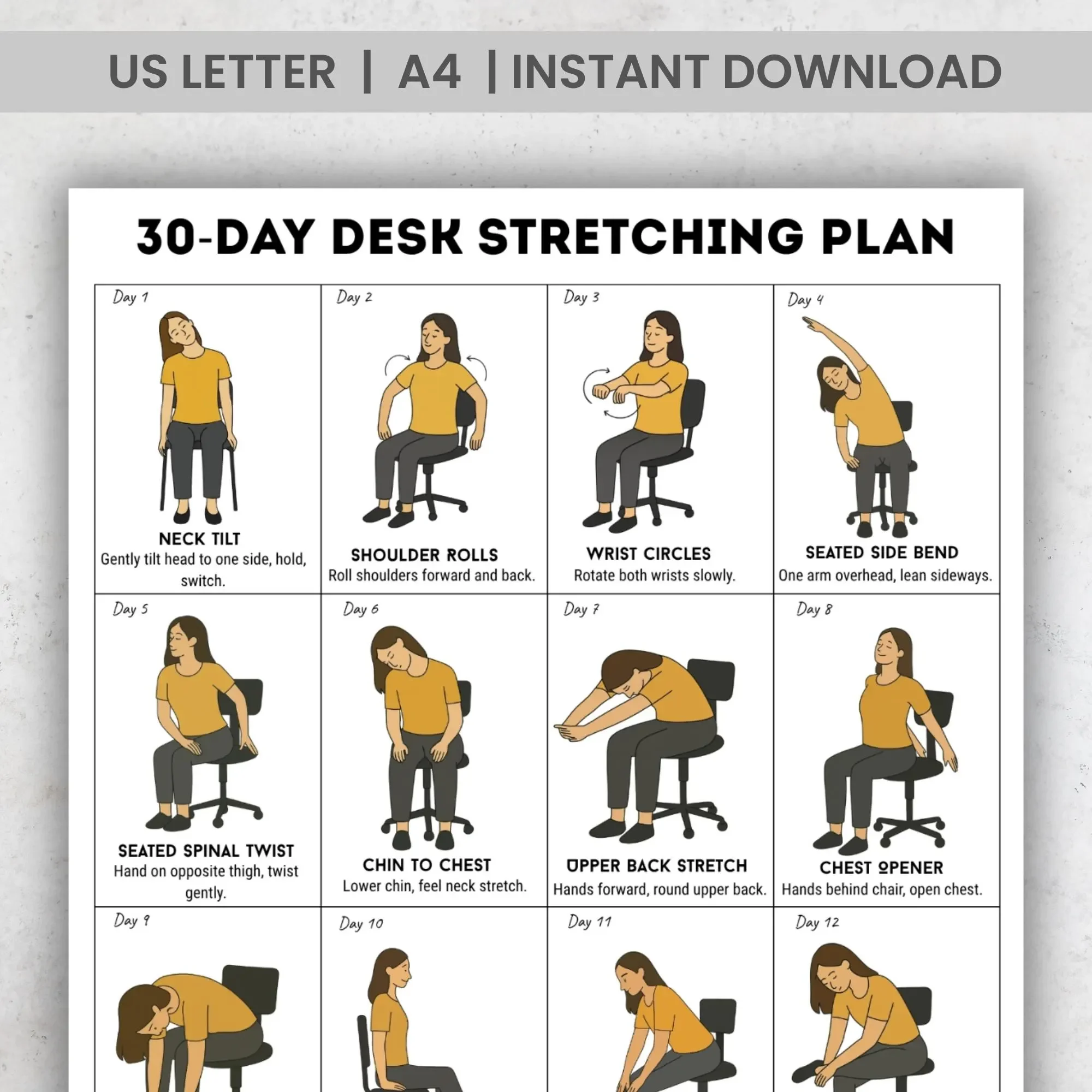
Another effective stretch is the seated shoulder blade squeeze. Sit upright and draw your shoulder blades together as if trying to hold a pencil between them. Hold this for a few seconds and then relax. These simple moves ease tightness commonly felt after hours of typing or phone use.
Upper Back and Spine Mobility Moves
To improve mobility in the upper back, try a seated spinal twist. Place your right hand on the back of the chair and gently rotate your torso to the right, looking over your shoulder. Hold briefly, return to center, and repeat on the other side.
For spine flexibility, stretch your arms overhead and interlace your fingers with palms facing upward. Reach gently toward the ceiling, elongating the spine. This helps counteract the hunched posture many develop during desk work.
Lower Back and Hip Openers
Relieving lower back stiffness can be achieved with a seated pelvic tilt. Sit with your feet flat on the floor and gently tuck your pelvis under by tightening your abdominal muscles. Hold for a few seconds, then release to a neutral position. This small movement activates core muscles and relieves pressure on the lower back.
A hip opener stretch involves crossing one ankle over the opposite knee while seated. Lean forward slightly to deepen the stretch around the hip area. This targets tightness caused by sitting with hips flexed for long periods.
Leg and Ankle Flexibility Stretches
Leg circulation benefits from simple foot pumps and ankle circles. With feet flat on the floor, lift your heels while keeping toes down, then switch by raising toes while heels stay planted. This movement boosts blood flow and reduces sluggishness.
Ankle circles involve lifting one foot slightly off the ground and rotating the ankle in slow, controlled circles. Repeat with the other foot. These stretches can help prevent stiffness and discomfort in the legs during long stretches of immobility.
Integrating Chair Stretching into Your Workday
Recommended Frequency and Timing
Consistency is key when it comes to chair stretching. Aim to stretch every 30 to 60 minutes to break up periods of sitting. Even a few minutes per session can promote mobility and reduce fatigue. Consider incorporating stretches during routine breaks or natural pauses, like after finishing an email or before a meeting.
This habit encourages movement without disrupting workflow and gradually becomes a natural part of your daily rhythm.
Using Reminders and Apps for Consistency
It’s easy to forget to stretch when focused on tasks. Setting reminders through your phone or computer can be a helpful nudge. Many apps offer customizable alerts to prompt stretching or short activity breaks. This technology use supports building a healthy habit without adding mental clutter.
Experiment with different tools to find what fits best with your schedule and preference. Over time, these prompts can enhance both your physical well-being and work efficiency.
Additional Wellness Tips for Office Employees
Ergonomic Tools to Complement Stretching
While stretching improves flexibility and reduces tension, ergonomic accessories can make your workstation more supportive overall. Items like adjustable chairs, sit-stand desks, and keyboard trays help maintain proper alignment and decrease strain.
When your environment supports healthy posture, stretching becomes even more effective. Investing in ergonomic improvements is a simple way to create a comfortable workspace that fosters long-term wellness.
Hydration and Posture Awareness
Staying hydrated is a subtle but important part of office wellness. Drinking enough water keeps muscle tissues supple and helps combat fatigue. Keep a water bottle at your desk as a reminder to sip regularly.
Alongside hydration, cultivate awareness of your posture throughout the day. Small corrections, like sitting upright or repositioning your monitor, complement your stretching routine. These mindful practices help prevent tightness before it starts.
Conclusion
Chair stretching exercises offer a practical and accessible way for office workers to address the physical challenges associated with prolonged sitting. By understanding common issues, preparing a supportive workspace, and following a series of simple stretches, employees can enhance their comfort and mobility without leaving their chairs.
Integrating these stretches consistently—itself made easier by reminders and ergonomic tools—helps maintain a healthier workday. Pairing movement with good posture and hydration further supports overall well-being. Taking small, intentional steps toward stretching can lead to meaningful improvements in how you feel during and after your work hours.


