
Understanding the Importance of Daily Gratitude
How Gratitude Influences Mental Clarity
Gratitude plays a vital role in shaping our mental clarity by fostering a positive mindset that helps us focus on what truly matters. When we regularly acknowledge things we are grateful for, our brains shift away from negative or distracting thoughts. This shift allows us to approach challenges with a clearer and calmer perspective, improving decision-making and emotional resilience. Over time, this clarity can lead to enhanced productivity and overall well-being.

The Science Behind Gratitude and Brain Health
Scientific studies have demonstrated that practicing gratitude activates regions of the brain associated with dopamine and serotonin, two chemicals responsible for feelings of happiness and satisfaction. This neurochemical response not only boosts mood but also reduces stress and anxiety levels. Moreover, consistent gratitude practice has been linked to improved sleep quality and lower blood pressure, highlighting its comprehensive benefits for brain health and mental functioning.
Preparing Yourself for a Daily Gratitude Practice
Setting Realistic Expectations
Before embarking on a daily gratitude practice, it is crucial to set achievable goals. Gratitude is not about forcing positivity but about gently recognizing small moments of appreciation. Understand that developing this habit takes time and patience. Begin with manageable periods, like a few minutes each day, and be compassionate with yourself if some days feel harder than others. This mindset fosters sustainable growth rather than frustration.
Choosing the Right Time and Environment
The effectiveness of a gratitude practice often hinges on when and where you engage in it. Select a quiet, comfortable space that minimizes distractions, allowing you to focus deeply on your reflections. Some find that mornings set a positive tone for the day, while others prefer evenings to unwind and reflect. Experiment with different times and environments until you find what supports your consistency and presence best.
Step 1: Start with Mindful Awareness
Techniques to Cultivate Present Moment Awareness
Mindful awareness forms the foundation of meaningful gratitude practice. Begin by grounding yourself in the present moment through simple breathing exercises or body scans. Paying attention to your senses—what you see, hear, and feel—helps anchor your attention away from worries about past or future events. This attentiveness creates space for genuine appreciation to arise naturally, setting the tone for the next steps in your gratitude routine.
Step 2: Identify Three Things You Are Grateful For
Using Journals and Digital Tools Effectively
Once grounded in the present, focus on pinpointing specific aspects of your life that bring you gratitude. Choosing three items each day keeps the practice focused yet manageable. To maintain consistency, consider maintaining a dedicated gratitude journal or using mobile apps designed to prompt daily entries. These tools can help you track your reflections and notice patterns over time, reinforcing your connection to the positive elements in your life.
Step 3: Reflect on Why These Things Matter
Deepening Your Gratitude Experience
Identifying what you appreciate is just the beginning. Taking a moment to delve into why each item holds significance enriches your gratitude practice. For example, instead of simply noting gratitude for a supportive friend, reflect on how their presence influences your life and emotions. This deeper exploration helps reinforce emotional connections and shifts gratitude from a superficial list to an embodied experience, enhancing its impact on your mental clarity.
Step 4: Integrate Gratitude into Your Routine
Morning vs. Evening Practices
Deciding whether to practice gratitude in the morning or evening depends on your lifestyle and goals. Morning practices can inspire motivation and set a positive mindset for the day ahead. Alternatively, reflecting on gratitude in the evening offers a calming closure, helping to release the day’s stress. You may even find value in experimenting with both to see which time supports greater mental clarity for you.
Creating Reminders and Accountability
To make gratitude a daily habit, integrating reminders is essential. Setting alarms, placing notes in visible locations, or associating gratitude with existing routines can keep you on track. Additionally, sharing your practice with a friend or joining a gratitude group fosters accountability and encouragement, preventing lapses even during busy or challenging periods.
Step 5: Overcoming Common Challenges
Dealing with Negative Thoughts
It is natural for negative thoughts to emerge, especially during difficult times. Instead of resisting these feelings, acknowledge them without judgment and gently redirect your focus back to gratitude. Recognize that gratitude does not deny hardship but rather provides a balanced perspective. Cultivating this dual awareness helps maintain mental clarity even amid emotional turbulence.
Maintaining Consistency During Busy Days
Busy schedules can interfere with your gratitude practice. When time is limited, shorten your routine to a quick mental reflection instead of an extensive journaling session. Integrate gratitude into transitional moments, such as commuting or waiting in line. Remember, the key is regularity, not duration. Even brief acknowledgments can accumulate significant benefits over time.
Amplifying the Effects of Gratitude
Combining Gratitude with Meditation and Affirmations
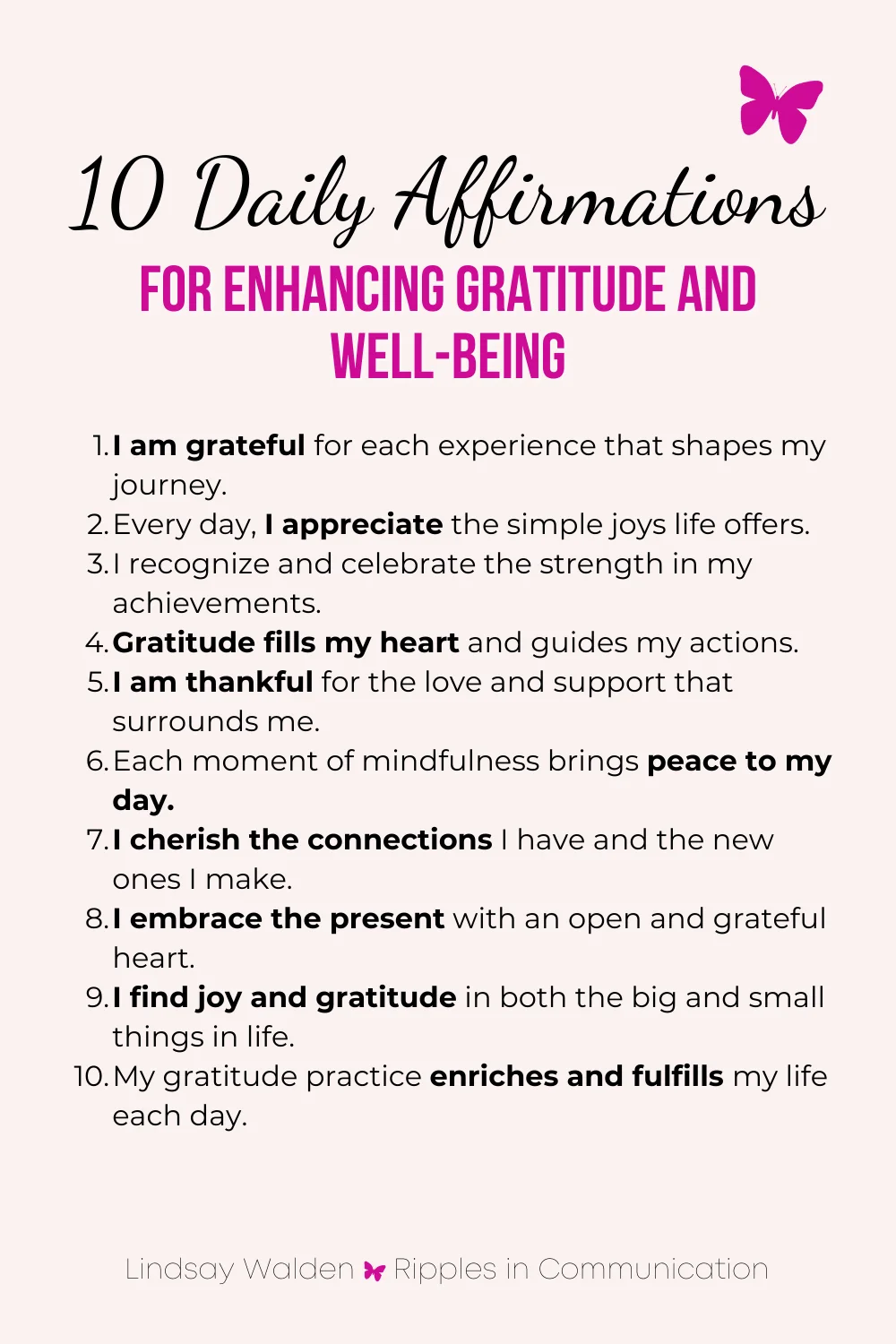
To deepen the benefits of gratitude, consider pairing it with meditation and positive affirmations. Meditation enhances your capacity to stay present and observe thoughts without attachment, which complements the reflective nature of gratitude. Positive affirmations focused on self-worth and well-being can reinforce the optimistic mindset that gratitude fosters, amplifying improvements in mental clarity and emotional balance.
Tracking Progress and Mental Clarity Improvements
Tools and Methods to Measure Your Growth
Monitoring your progress helps sustain motivation and reveals the tangible impact of your gratitude practice. Regularly review your journal entries and note shifts in mood and perspective. Digital apps often include tracking features and reminders that provide insights over weeks or months. Additionally, consider periodic self-assessments of your mental clarity and stress levels through mindfulness scales or simple journaling prompts to observe your evolving mindset.
Conclusion: Embracing Gratitude as a Lifelong Habit
Integrating a daily gratitude practice is more than a temporary exercise—it is a commitment to nurturing ongoing mental clarity and emotional well-being. By approaching gratitude step by step, setting realistic expectations, and adapting to challenges, you build a sustainable habit that enhances every aspect of your life. Over time, gratitude becomes a natural lens through which you experience the world, bringing lasting peace and focus to your daily journey.


