
Understanding Hip Mobility and Its Importance for Seniors
What is Hip Mobility?
Hip mobility refers to the ability of the hip joint to move freely through its full range of motion. This includes bending, rotating, and extending movements that are essential for everyday activities such as walking, sitting, and climbing stairs. For seniors, maintaining good hip mobility is crucial to preserve independence and reduce the risk of falls and injuries.
How Aging Affects Hip Flexibility and Movement
As we age, natural wear and tear, along with decreased physical activity, often lead to stiffness and limited mobility in the hips. Muscle weakness, joint degeneration, and conditions like arthritis contribute to reduced flexibility, making simple movements more difficult and sometimes painful. This decline can hinder day-to-day functions, affecting quality of life and overall health.
Benefits of Improving Hip Mobility in Daily Life
Enhancing hip mobility can significantly improve balance, posture, and walking ability. It reduces joint pain and stiffness, thus lowering the risk of falls—a common concern among seniors. Improved mobility also supports participation in various activities, promoting physical fitness and mental well-being. Ultimately, greater freedom of movement fosters confidence and independence in daily living.
Preparations Before Starting Chair Exercises
Choosing the Right Chair for Stability

A stable chair is essential when performing hip exercises to ensure safety and effectiveness. Opt for a firm, non-swivel chair with a straight back and no wheels. The seat height should allow your feet to rest flat on the floor, providing a secure base. Armrests can offer additional support, but they should not restrict leg movement.
Safety Tips and Precautions
Before beginning any exercise routine, it’s important to consult a healthcare provider, especially if you have existing health conditions or joint problems. Warm up gently to prepare your muscles and joints. Perform each movement slowly and within a comfortable range to avoid strain. If you feel pain or dizziness, stop immediately and seek advice. Using a chair positioned near a wall or sturdy surface for extra balance can also prevent falls.
Top Easy Chair Exercises to Enhance Hip Mobility
Seated Hip Marching
The seated hip marching exercise helps promote gentle hip flexion and improves coordination. Sitting upright, lift one knee towards your chest and then lower it back down. Alternate legs at a comfortable pace. This simple motion activates hip muscles and encourages joint movement without placing pressure on the hips.
Hip Circles from a Chair
Hip circles enhance rotational flexibility. While seated, gently lift one foot off the ground and trace slow circles in the air with your knee. Keep the motion controlled to prevent any discomfort. Complete several rotations before switching legs. This exercise helps lubricate the hip joint and improves circulation.
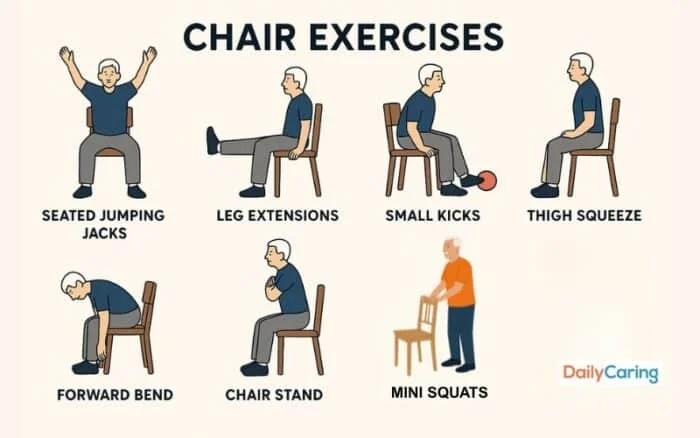
Leg Lifts and Extensions
Leg lifts and extensions strengthen the muscles around the hip, which support joint stability. Start seated, slowly extend one leg forward until straight, hold briefly, then lower it down without touching the floor. Repeat with the other leg. This movement can reduce stiffness and increase muscle tone, aiding functional mobility.
Seated Figure Four Stretch
This stretch targets the hip rotators and helps relieve tightness. Cross one ankle over the opposite knee, forming a “figure four” shape. Gently press down on the raised knee to deepen the stretch, holding for 15 to 30 seconds. Switch sides to keep both hips flexible. This position can alleviate discomfort from prolonged sitting or muscle tension.
Side Leg Raises
Side leg raises activate the hip abductors, crucial for balance and side-to-side movement. While sitting tall, slowly lift one leg out to the side while keeping it straight. Hold for a moment, then lower it back down with control. Repeat on the opposite side. Strengthening these muscles supports better stability and walking mechanics.
Incorporating Chair Exercises into a Daily Routine
Best Time of Day to Exercise
Choosing the right time to exercise can influence consistency and comfort. Many seniors find morning sessions helpful for reducing stiffness and energizing the day ahead, while others may prefer afternoon or early evening when muscles are warmer. The key is to pick a time that fits naturally into your routine to encourage regular practice.
Combining Mobility Work with Other Activities
Integrating chair exercises with other light activities such as walking, stretching, or gardening can enhance overall fitness. Movement variety prevents boredom and addresses multiple aspects of physical health. Incorporating these exercises during television breaks or after meals can make them more manageable and sustainable.
Tracking Progress and Staying Motivated
Monitoring improvements, such as increased ease of movement or less discomfort, helps maintain motivation. Keeping a simple journal or using a calendar to record daily exercises can provide a sense of accomplishment. Setting small, realistic goals encourages persistence and highlights the benefits of consistent practice.
Additional Lifestyle Tips for Maintaining Hip Health
Importance of Regular Walking and Movement
Staying active beyond chair exercises is vital for hip health. Regular walking promotes blood flow, strengthens muscles, and keeps joints supple. Even short, frequent walks help prevent stiffness and maintain overall mobility. Avoid prolonged periods of sitting by standing up and moving around periodically.
Diet and Hydration for Joint Health
A balanced diet rich in anti-inflammatory foods such as fruits, vegetables, and omega-3 fatty acids supports joint function. Proper hydration keeps cartilage lubricated and reduces discomfort. Avoiding excessive processed foods and maintaining a healthy weight further protects the hips from undue stress and deterioration.


