
Introduction to Time-Blocking for Busy Parents
In the whirlwind of daily responsibilities, busy parents often find themselves juggling multiple tasks with little downtime. Time-blocking emerges as a highly effective technique to bring clarity and order to hectic schedules. This method involves dividing your day into dedicated segments, each allocated to a specific activity. By doing so, parents can regain control over their time, reduce the overwhelming feeling of chaos, and foster a more balanced lifestyle.

Understanding how time-blocking works and why it is especially beneficial for parents can pave the way to less stressful, more productive days.
Understanding the Daily Challenges Faced by Busy Parents
Common Stressors and Time Management Pitfalls
Day-to-day life for parents is packed with endless errands, childcare duties, work commitments, and household management. Many struggle with unpredictable interruptions, last-minute schedule changes, and competing priorities. These factors contribute to common stressors such as feeling rushed, forgetting important tasks, and experiencing constant mental overload. Often, time management pitfalls arise from attempting to multitask excessively or neglecting to set clear boundaries between different activities.
The Role of Time-Blocking in Stress Reduction
Time-blocking provides a structured approach that can counteract these challenges by creating predictability and focus. When parents assign specific blocks of time to individual tasks, they reduce the tendency to switch between activities prematurely, which often leads to inefficiency and stress. This technique also helps highlight where time is being spent, enabling better adjustments. The resulting clarity can alleviate feelings of overwhelm and build a more manageable daily routine.
Core Principles of Effective Time-Blocking
Prioritization and Task Categorization
Effective time-blocking begins with determining which tasks are most important or urgent. Prioritizing helps ensure that critical responsibilities receive appropriate attention early in the day or within key time segments. Grouping similar tasks together—such as emails, errands, or meal preparation—can also optimize focus and reduce the mental effort needed to switch contexts.
Setting Realistic Time Intervals
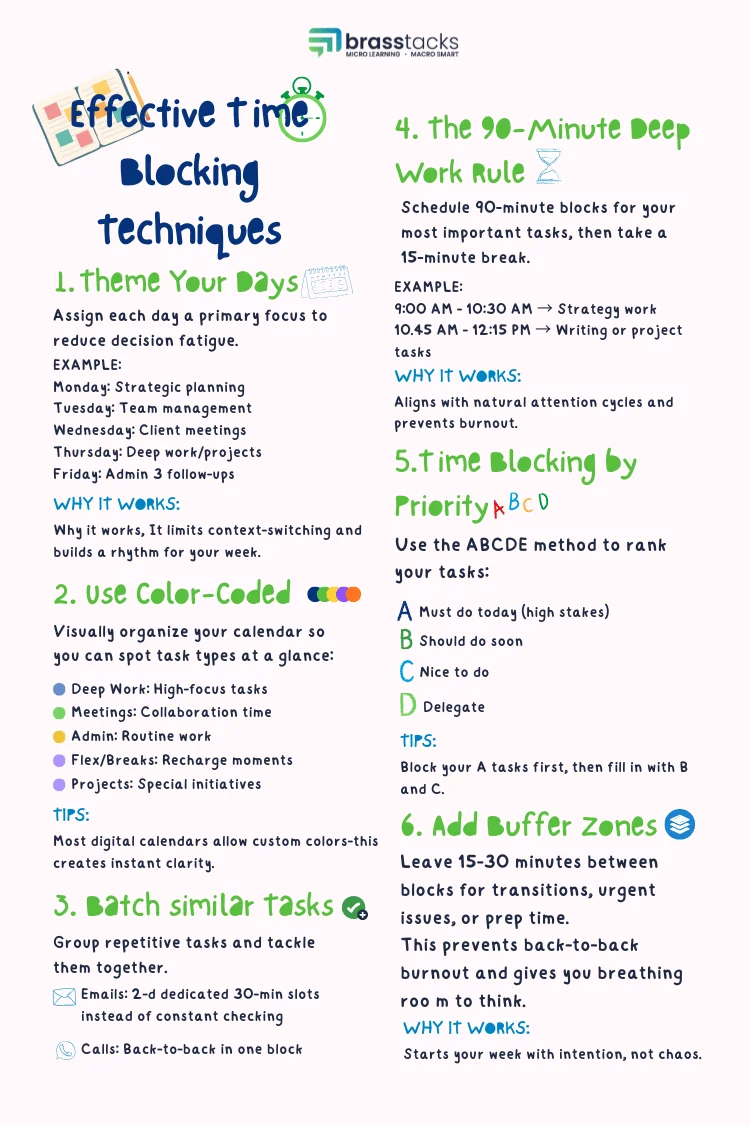
Another fundamental principle involves assigning each task a reasonable time frame. It’s essential to estimate how long activities typically take and allow enough room to complete them without rushing. Overestimating time can lead to wasted hours, while underestimating contributes to stress and disruption. Finding a balance based on past experience helps sustain motivation and a sense of achievement.
Importance of Buffer Times
In any busy parent’s schedule, unexpected events are inevitable. Therefore, building buffer times between blocks serves as a critical safety net. These short gaps offer time to handle interruptions, transition smoothly between tasks, and reduce the anxiety of falling behind. Incorporating buffers makes the overall schedule more flexible and resilient to daily fluctuations.
Step-by-Step Guide to Implementing Time-Blocking
Assessing Your Current Schedule
Start by tracking your existing daily routine for several days. Note when tasks begin and end, the interruptions you face, and how often you switch between activities. This assessment reveals patterns, bottlenecks, and wasted moments. It also provides a realistic foundation on which to build your time-blocked schedule.
Designing Your Time Blocks
Using the insights from your assessment, divide your day into blocks dedicated to specific tasks or task groups. Prioritize essential activities, then allocate more flexible blocks for less urgent tasks. Remember to assign sufficient time for each block and integrate buffer periods to accommodate unexpected events. Visualizing your day on a calendar or planner can make this process clearer.
Integrating Family and Personal Time
Time-blocking isn’t just for chores and work—it also includes intentional moments for family connection and personal wellbeing. Setting aside blocks for shared meals, playtime with children, and self-care activities helps prevent burnout and strengthens relationships. Recognizing these elements as equally important encourages a healthier, more balanced lifestyle.
Top Time-Blocking Techniques Tailored for Parents
Single-Task vs. Themed Time Blocks
One approach is to dedicate blocks to single tasks, which can boost concentration on complex or high-priority projects. Alternatively, themed blocks group similar activities, such as all phone calls or house cleaning, allowing parents to maintain momentum within one type of task. Experimenting with both techniques helps identify what fits best within a family’s unique pace and demands.
Adaptive Time Blocking for Unpredictable Schedules
Since parenting often involves unexpected changes, a flexible time-blocking system is crucial. This can mean leaving certain blocks “open” for spontaneous needs or regularly revisiting and adjusting the schedule as the day unfolds. Creating a rhythm that embraces adaptability without sacrificing structure encourages steady progress while accommodating life’s uncertainties.
Using Digital Tools and Apps Effectively
Modern digital calendars and time management apps can enhance the time-blocking experience. They allow easy adjustments, reminders, and an overview of daily priorities. Many apps support color-coding blocks or syncing family calendars, which simplifies coordination and communication. Leveraging technology can streamline the planning process and keep everyone on the same page.
Strategies to Maintain Consistency and Overcome Roadblocks
Handling Interruptions Gracefully
Interruptions are part of parenting, but they don’t have to derail the entire day. One strategy is to acknowledge the disruption, address urgent needs quickly, and then return to the planned block without guilt. Over time, this approach reduces frustration and helps parents maintain momentum despite inevitable challenges.
Adjusting Blocks for Flexibility Without Losing Structure
While discipline in following a schedule is important, rigidity can lead to discouragement when plans don’t unfold perfectly. Allowing for mid-day adjustments, moving blocks when needed, and reassessing priorities regularly keeps the system alive and responsive. This balance between structure and flexibility sustains engagement and long-term success.
Success Stories: How Time-Blocking Transformed Parenting Stress
Many parents who have adopted time-blocking report significant improvements in managing stress and feeling more in control of their lives. One common experience is the shift from constantly reacting to daily demands towards proactively allocating time for essential activities. These success stories often highlight better sleep, increased patience with children, and more meaningful family interactions as key benefits. The technique fosters a sense of accomplishment that fuels ongoing commitment.
Conclusion: Embracing Time-Blocking as a Lifestyle Choice
Time-blocking offers busy parents a practical framework to reduce daily stress and optimize time use. By thoughtfully prioritizing, setting realistic intervals, and allowing flexibility, parents can create a more balanced and fulfilling routine. Adopting time-blocking not as a temporary fix but as part of a lifestyle empowers parents to nurture both their family and personal wellbeing. With patience and consistency, this technique can transform the way parents experience their demanding yet rewarding days.


