
Introduction to Outdoor Play and Physical Development
Why Outdoor Play is Crucial for Ages 3-6
Outdoor play is more than just fun for children aged 3 to 6; it serves as a foundation for their physical development. During these formative years, children rapidly develop motor skills, strength, and coordination. Engaging with the natural environment encourages them to move in diverse ways, promoting muscle growth and improving balance. Moreover, time spent outdoors increases exposure to fresh air and sunlight, which positively affects overall health and mood. This blend of physical and sensory stimulation is essential to help young children build the skills they need for confident movement and active living.

Key Physical Milestones in Early Childhood
Between ages three and six, children typically reach several important physical milestones. They begin to run with more control and speed, climb more confidently, and jump with better coordination. Fine motor skills, such as grasping small objects, begin to refine, supporting activities like drawing or buttoning clothes. Understanding these milestones helps caregivers tailor outdoor play activities that align with a child’s growth stage, ensuring exercises that are challenging yet achievable. Progressing through these milestones boosts a child’s independence and physical literacy.
Top Daily Outdoor Activities for Enhancing Motor Skills
Gross Motor Skill Builders: Running, Jumping, and Climbing
Gross motor skills form the basis for many physical activities and are essential at this age. Encourage children to run freely across open spaces, which strengthens leg muscles and improves cardiovascular health. Introducing jumping games, such as hopping over small obstacles or skipping, enhances balance and coordination. Climbing on age-appropriate playground equipment helps develop upper body strength and spatial awareness. These activities challenge the body in various ways, supporting the growth of powerful yet controlled movements that form the backbone of physical development.
Fine Motor Development through Nature Exploration
Fine motor skills advance as children manipulate smaller objects and engage in precise movements. Outdoor play that involves nature exploration provides excellent opportunities for these skills to flourish. Picking up leaves, sorting pebbles, or threading flowers can refine hand-eye coordination and dexterity. Activities like digging in the dirt encourage stronger hand muscles and sensory exploration. By combining sensory play with fine motor challenges, children develop the skills necessary for later tasks such as writing and using tools.
Creative Play Ideas to Encourage Movement and Coordination
Imaginative Games with Physical Challenges
Incorporating imagination into physical play makes movement exciting and meaningful for children. Games like “pretend jungle explorers” or “pirate treasure hunts” encourage them to run, climb, and crawl while engaged mentally. These roles motivate children to tackle physical challenges willingly, improving their coordination and stamina. Imaginative play also promotes problem-solving and cooperation, valuable social skills that coincide with physical growth.
Using Everyday Outdoor Objects for Active Play
Household and garden items can easily be transformed into tools for physical activity. For example, a simple ball can be used for throwing, catching, or kicking exercises that enhance hand-eye coordination and leg strength. Sticks and stones can be crafted into makeshift obstacle courses or creative building projects, requiring precise movements and balance. This resourcefulness not only makes outdoor play more accessible but teaches children how to use their environment actively and creatively.
Structuring a Balanced Daily Outdoor Play Routine
Ideal Duration and Intensity for Different Activity Types
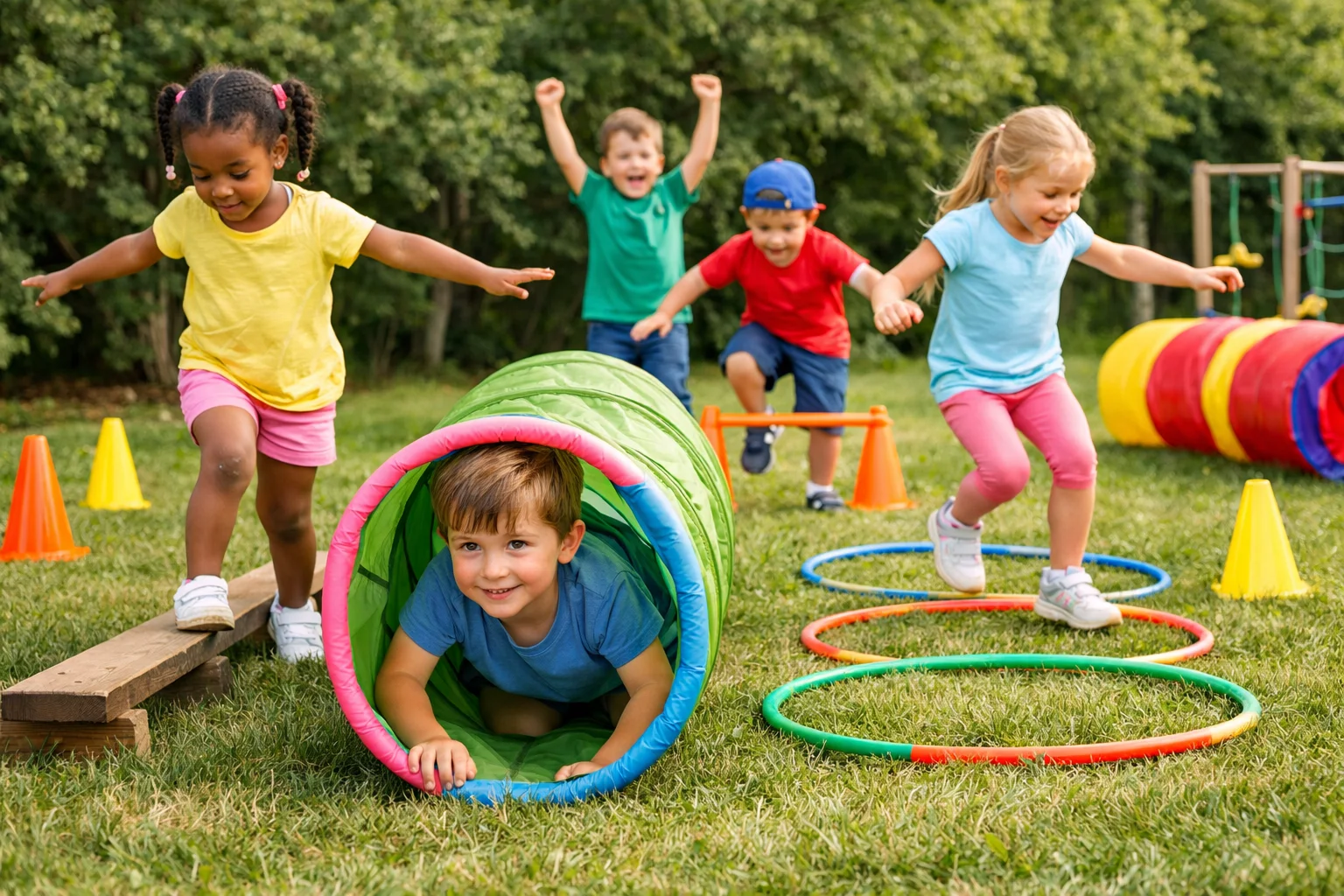
Establishing a daily outdoor routine that balances intensity and variety is important to maintain a child’s interest and promote overall fitness. Typically, children benefit from at least one hour or more of physical activity daily. This time can be divided between high-intensity activities like running and climbing, which build strength and stamina, and lower-intensity play such as nature walks or ball games, which encourage skill development and coordination. The emphasis should be on movement enjoyment, not on strict performance, allowing children to self-regulate their energy and interest levels.
Combining Free Play with Guided Physical Exercises
While free play encourages creativity and independence, incorporating guided exercises ensures children work on specific physical skills. Short, structured activities such as balance beam walks, jumping jacks, or hopscotch help target motor milestones intentionally. Following these exercises with free play allows children to practise skills in their own way, reinforcing learning. This combination fosters a well-rounded routine supporting both physical competence and motivation to stay active.
Safety Tips and Preparing a Child-Friendly Outdoor Environment
Essential Safety Gear and Precautions
Ensuring safety during outdoor play is fundamental, especially for young children. Depending on the activity, appropriate gear such as helmets, knee pads, or sturdy shoes should be used to prevent injuries. Caregivers should regularly check play equipment for hazards and supervise activities closely, especially when children are climbing or running near uneven surfaces. Sun protection, including hats and sunscreen, is equally important to safeguard against harmful UV rays during longer play sessions.
Choosing Secure and Stimulating Play Spaces
The environment plays a crucial role in both safety and engagement during outdoor play. Selecting areas free from traffic and dangerous debris ensures children can explore with confidence. Play spaces that offer varied features such as grassy patches, climbing structures, and natural elements like trees stimulate curiosity and diverse movement. A well-maintained, secure space encourages children to take healthy physical risks while feeling safe, creating the perfect balance for growth and enjoyment.


