
Understanding the Connection Between Breathing and Concentration
How Breath Influences Brain Function
Imagine sitting at your desk, feeling overwhelmed by a mountain of unfinished tasks. Your mind races, and focusing feels nearly impossible. This state often relates directly to how we breathe. Shallow, rapid breaths can contribute to feelings of anxiety, making it harder for your brain to process information efficiently. On the other hand, intentionally slowing your breath can activate your parasympathetic nervous system, the part responsible for calmness and relaxation. By changing your breathing pattern, you alter the brain’s state, making it more receptive to concentration and problem-solving.
The Science Behind Focus and Oxygen Flow
Scientific studies have shown that oxygen plays a crucial role in brain function. The brain, though only about 2% of body weight, consumes around 20% of the body’s oxygen supply. When breathing is shallow, oxygen intake is limited, which can impair cognitive functions like attention and memory. Deep, controlled breathing improves oxygen flow, supporting neurons and enhancing mental clarity. For workers in high-stress environments or those juggling complex projects, this improved oxygenation becomes a simple yet effective way to sharpen focus without external stimulants.
Top Breathing Techniques to Enhance Work Concentration
Box Breathing: Step-by-Step Guide
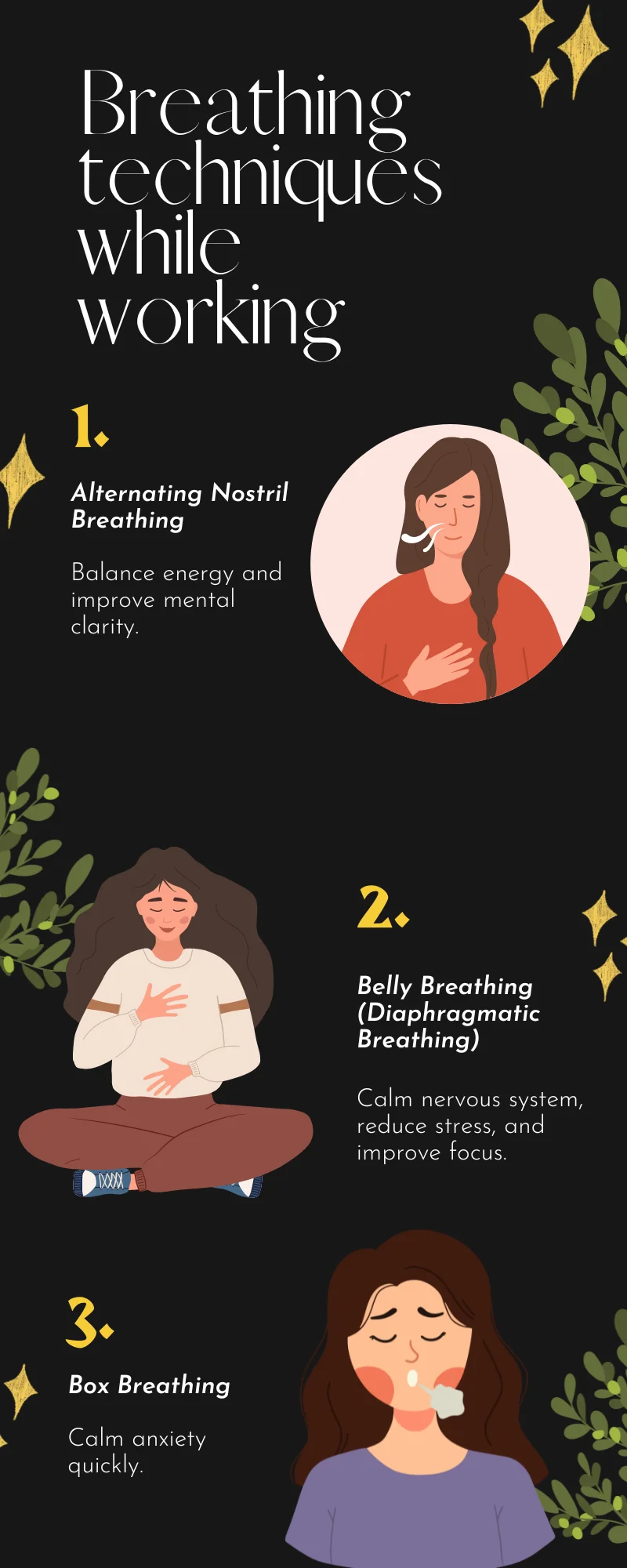
Box breathing, popularized by Navy SEALs to maintain calm under pressure, offers a straightforward method to regain control over scattered thoughts. To practice, envision breathing in four distinct stages: inhale for 4 seconds, hold for 4 seconds, exhale for 4 seconds, and pause for another 4 seconds before repeating. For example, Sarah, a graphic designer, shared how doing box breathing for five minutes before starting her design sessions helped her knock out creative blocks and enter a deep flow state.
4-7-8 Breathing for Calm Focus
This technique, created by Dr. Andrew Weil, focuses on enhancing relaxation to prepare your mind for concentration. Inhale quietly through your nose for 4 seconds, hold that breath for 7 seconds, and slowly exhale through your mouth for 8 seconds. It’s especially useful when facing tight deadlines or tricky calls. Imagine John, a project manager, who uses 4-7-8 breathing right before client meetings to lower his pulse and keep his attention laser-focused, despite the pressure.
Nadi Shodhana (Alternate Nostril) Breathing
Nadi Shodhana, rooted in yogic traditions, balances the hemispheres of the brain by alternating breath through each nostril. Sitting comfortably, you close one nostril with a finger while inhaling through the other, then switch. This rhythmic pattern not only centers the mind but refreshes cognitive function, making it a great tool for those mid-afternoon slumps. For instance, Emily, a software developer, integrates this practice during her work breaks to reset her mental clarity and stave off fatigue.
Integrating Breathing Exercises into Your Workday
Morning Routine: Setting a Focused Tone
Starting your day with breathing exercises can set a solid foundation for productivity. Instead of diving straight into emails or tasks, spend a few minutes practicing a simple breathing technique like box breathing. This approach prepares your mind to face challenges without distraction. For example, David, a writer, credits his morning breathing ritual for helping him stay on track with his deadlines by promoting sustained attention from the moment he begins work.
Midday Breathing Breaks to Combat Fatigue
As lunch fades and energy dips appear, it’s tempting to reach for caffeine or scroll aimlessly on your phone. Instead, taking a mindful breathing break can re-energize your brain more effectively. Taking five minutes to practice 4-7-8 breathing or alternate nostril breathing can reduce mental exhaustion and improve focus for the remainder of the day. Consider Lisa, who schedules breath-focused pauses after lunch and finds herself more engaged during afternoon meetings.
Pre-Meeting Breathing Rituals for Sharpness
Before stepping into an important meeting or presentation, nerves can cloud judgment and concentration. Incorporating breathing exercises into your pre-meeting routine can alleviate this. By calming your nervous system, you prepare your mind to absorb information and respond thoughtfully. Tom, a sales executive, swears by taking a few deep, slow breaths before calls, enabling him to stay present and responsive, rather than reactive.
Common Challenges and How to Overcome Them
Dealing with Distractions During Breathing Practice
It’s common to struggle with focus when first adopting breathing exercises, especially in busy work environments. Interruptions, buzzing notifications, or wandering thoughts can pull you away from your breath. One strategy is to find a quiet spot, even if just for a minute, or use noise-cancelling headphones to minimize disruptions. Another helpful approach is to acknowledge the distraction without frustration and gently return your attention to breathing, treating it as mental training rather than a test.
Consistency Tips for Long-Term Benefits
Many people start breathing techniques enthusiastically but falter when results don’t appear instantly. The key is to fit the practice into existing habits. For example, pairing breathing exercises with daily rituals such as morning coffee or handwashing builds routine. Setting reminders or alarms can also support consistency. Realizing that even a minute of focused breathing daily compounds into lasting concentration improvements can motivate sustained practice.
Tools and Apps to Support Breathing for Focus
Best Apps for Guided Breathing Sessions
In today’s digital age, several apps offer guided breathing exercises tailored to enhance focus. Apps like Calm and Breathe+ provide customizable sessions and visual aids that keep your practice engaging and easy to follow. These tools can be especially helpful for beginners who benefit from structure and variety, making breathing breaks a seamless part of the workday routine.
Wearables That Monitor Breath and Stress
For those seeking tangible feedback, wearable devices such as smartwatches and fitness bands now include sensors monitoring breathing patterns and stress levels. For instance, some models alert you when your breathing becomes shallow or erratic, prompting timely breathing exercises. This immediate feedback encourages proactive management of concentration and stress during demanding tasks, creating a personalized concentration toolkit right on your wrist.
Conclusion: Making Breath Work Your Secret to Productivity
Breathing techniques offer a simple, accessible way to boost concentration without the need for special equipment or a major schedule overhaul. By understanding how breath affects brain function and integrating mindful exercises into daily routines, workdays can become more focused and productive. While distractions and consistency challenges exist, the real-life stories of professionals using breath to enhance clarity reveal a universally applicable tool. Embracing your breath as an ally transforms mental fog into sharp, deliberate focus—turning breath work into your secret weapon for success.


